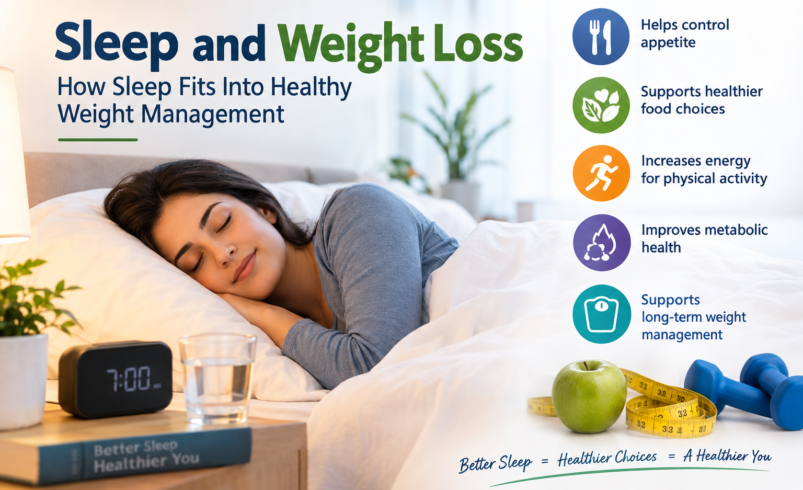

Sleep and Weight Loss: How Sleep Fits Into Healthy Weight Management
Sleep is often treated as separate from diet and exercise, but it plays an important role in healthy weight management. If you are trying to lose weight, getting enough quality sleep may help support better appetite control, healthier food choices, physical activity, and metabolic health. Sleep and weight loss are therefore closely connected, although sleeping by itself does not cause substantial fat loss.
The relationship works in both directions. Poor sleep can make weight management harder, while changes in weight, eating habits, stress, or health conditions can also affect sleep. Understanding this connection can help you build a more complete approach to reaching and maintaining a healthy weight.
What Is the Connection Between Sleep and Weight Loss?
Sleep and weight loss are connected through several processes that influence appetite, energy intake, metabolism, blood sugar regulation, and daily behavior.
When you regularly get enough sleep, your body has more opportunity to maintain normal hormonal and metabolic functions. In contrast, insufficient sleep can affect hunger and fullness signals. The National Heart, Lung, and Blood Institute notes that sleep deficiency can increase ghrelin, a hormone associated with hunger, while decreasing leptin, a hormone involved in feelings of fullness.
Poor sleep may also make it more difficult to maintain healthy eating and activity habits. When you are tired, you may have less energy for exercise and may be more likely to choose convenient, calorie-dense foods.
This does not mean that sleep replaces a healthy diet or physical activity. Instead, sleep and weight loss should be viewed as parts of the same overall lifestyle.
Can Lack of Sleep Cause Weight Gain?
Yes, consistently getting too little sleep is associated with a greater risk of weight gain and obesity. However, sleep is only one factor involved in body weight. Diet, physical activity, genetics, medications, medical conditions, stress, and the environment can all influence weight.
A lack of sleep may contribute to weight gain in several ways:
- Increased hunger and appetite
- Greater cravings for highly palatable foods
- Changes in food choices
- Reduced motivation for physical activity
- Changes in blood glucose regulation
- Disruption of normal metabolic processes
- More waking hours in which eating may occur
This helps explain why questions such as “Does lack of sleep cause weight gain?”, “Does sleep deprivation cause weight gain?”, and “Does not getting enough sleep make you gain weight?” have become common among people trying to manage their weight.
The relationship is not as simple as one sleepless night automatically causing fat gain. Occasional poor sleep can affect how you feel and behave the next day, while chronic insufficient sleep may have more meaningful effects over time.
How Does Sleep Affect Weight Loss?
One reason sleep and weight loss are connected is that sleep can influence how much you eat and how your body regulates energy.
Sleep and Appetite
Sleep affects hormones and brain systems involved in hunger and fullness. When sleep is inadequate, changes in ghrelin and leptin can make hunger and satiety signals less favorable.
You may therefore find yourself feeling hungrier during the day or less satisfied after eating.
Sleep and Food Cravings
Sleep deprivation can also influence food choices. When you are tired, foods that are highly rewarding or convenient may become more appealing.
This can make it harder to maintain a calorie deficit if your goal is weight loss. You may also find it more difficult to plan meals, prepare nutritious food, or resist frequent snacking.
Sleep and Physical Activity
Tiredness can affect your motivation and ability to stay active. If poor sleep regularly leaves you exhausted, you may spend less time exercising or moving throughout the day.
Because physical activity contributes to energy expenditure and helps maintain muscle during weight loss, reduced activity can make weight management more challenging.
Sleep and Metabolic Health
Sleep also interacts with glucose regulation and insulin sensitivity. NHLBI reports that sleep deficiency can result in higher-than-normal blood sugar and affect the body’s response to insulin.
These metabolic effects are another reason sleep and weight loss should be considered together rather than treating sleep as an unrelated health habit.
Does Sleeping Help You Lose Weight?
Sleeping is not a weight-loss treatment by itself. You do not lose significant amounts of body fat simply because you spend more hours in bed.
However, sleep can support weight loss by helping create conditions that make healthy eating and activity easier.
A randomized clinical trial involving adults with overweight who normally slept less than 6.5 hours per night found that extending sleep reduced daily energy intake by about 270 calories compared with the control group. The study did not prescribe a diet or exercise program, suggesting that improving sleep itself may influence energy intake in people who habitually sleep too little.
That does not mean everyone who sleeps longer will automatically lose weight. The study was relatively small and focused on adults with overweight and short habitual sleep. More research is needed to understand how sleep extension affects long-term weight loss across different populations.
The practical takeaway is simple: sleep may support weight loss, but it works as part of a broader healthy lifestyle.
Can You Lose Weight While Sleeping?
Your body continues to use energy while you sleep. Your heart beats, lungs work, your brain remains active, and your cells continue carrying out essential processes.
Because your body uses energy during sleep, your body weight can be slightly lower when you wake up than it was the previous evening. But this does not mean you have burned a large amount of body fat overnight.
Much of the short-term change on the scale can come from changes in water, food, and waste in your body.
So, if you ask “Do you lose weight while sleeping?”, the answer depends on what you mean by weight. You may weigh less in the morning, but that overnight change should not be interpreted as substantial fat loss.
Do You Burn Fat While You Sleep?
Yes, your body can use stored fat for energy during sleep, but it also uses other energy sources. The amount of fat used varies according to factors such as your overall energy balance, metabolism, body composition, diet, physical activity, and the timing and quality of sleep.
Therefore, claims that you can simply “burn fat while sleeping” or “lose weight sleeping” should be treated carefully.
Sleep supports the processes involved in healthy weight management. It does not turn overnight sleep into a substitute for a sustainable calorie deficit, nutritious eating, and regular physical activity.
How Much Weight Do You Lose During Sleep?
There is no fixed amount of weight that everyone loses during sleep.
Your scale may show a lower number in the morning because your body has lost water through breathing and perspiration and because you have not eaten or drunk anything for several hours. The amount varies from person to person and from night to night.
For the same reason, you may sometimes see the scale move in the opposite direction. Changes in hydration, sodium intake, carbohydrate intake, digestion, hormonal fluctuations, and other factors can cause temporary changes in body weight.
If your goal is fat loss, it is more useful to look at longer-term weight trends than to judge progress from the difference between your nighttime and morning weight.
How Much Sleep Do You Need for Weight Loss?
For most adults, a consistent sleep schedule that provides around 7 to 9 hours of sleep per night is a useful general target. UCLA Health similarly notes that most adults need seven to nine hours of sleep most nights.
However, there is no specific number of hours that guarantees weight loss.
Questions such as “How many hours of sleep to lose weight?” and “How much sleep do I need to lose weight?” should therefore be approached from a broader health perspective.
The goal is not to sleep as much as possible. The goal is to get enough good-quality sleep consistently.
Sleeping six hours instead of five may be an improvement for someone who is chronically sleep deprived, but simply increasing sleep beyond your body’s needs does not automatically produce additional fat loss.
Can Sleeping Too Much Cause Weight Gain?
Too much sleep has been associated with some health conditions and weight-related outcomes, but this does not establish that sleeping longer directly causes weight gain.
For example, someone who sleeps for unusually long periods may have an underlying health condition, disrupted sleep, depression, poor sleep quality, or another factor that affects both sleep and weight.
This is why it is misleading to assume that “more sleep always means more weight loss” or that sleeping too much directly makes someone gain fat.
If you regularly sleep for unusually long periods and still feel tired, it may be worth discussing your sleep with a healthcare professional.
Can Sleeping Late Cause Weight Gain?
Going to bed late does not automatically cause weight gain. However, a consistently irregular sleep schedule can be associated with behaviors that make weight management more difficult.
For example, staying awake late may create more opportunities for snacking, reduce total sleep time if you still need to wake early, or disrupt your normal daily routine.
Sleep timing also interacts with the body’s circadian rhythms. NHLBI notes that the body’s circadian clocks influence how tissues such as the liver, fat, and muscle handle energy and nutrients, and that eating at unusual times can affect how the body handles fat.
The practical goal is therefore not to find a magical “best time to sleep to lose weight.” Instead, aim for a consistent sleep and wake schedule that allows you to get adequate, good-quality sleep.
Does Lack of Sleep Cause Weight Loss or Weight Gain?
Most people asking this question want to know whether not sleeping can somehow make them lose weight.
Although severe illness or prolonged sleep problems can sometimes be associated with unintended weight loss, sleep deprivation should not be used as a weight-loss strategy.
For typical weight management, insufficient sleep is more often associated with factors that can promote weight gain, including increased hunger, altered food choices, reduced activity, and metabolic changes.
So, lack of sleep and weight loss should not be treated as a useful combination. Deliberately sleeping less to lose weight can work against your health goals.
Can Better Sleep Help With Weight Loss?
Yes, improving sleep may make weight management easier, particularly if you are currently sleeping too little.
A healthier sleep pattern may help you:
- Manage hunger and fullness signals
- Reduce fatigue
- Make healthier food choices
- Maintain regular physical activity
- Support normal glucose regulation
- Maintain a more consistent daily routine
- Follow a sustainable weight-management plan
The CDC includes getting enough sleep alongside healthy eating, regular physical activity, and stress management as part of a lifestyle that supports a healthy weight.
This is an important distinction: sleep can help support weight loss, but it does not replace the fundamentals of weight management.
How to Sleep Better While Trying to Lose Weight
If you want to make sleep and weight loss part of the same health plan, focus on consistency rather than trying to find a special sleeping position, bedtime, or overnight fat-burning trick.
Keep a Consistent Sleep Schedule
Try to go to bed and wake up at approximately the same times each day. A regular schedule can help reinforce your body’s sleep-wake rhythm.
Create a Sleep-Friendly Bedroom
Keep your bedroom comfortable, dark, quiet, and cool. Reducing distractions can make it easier to fall asleep and stay asleep.
Limit Caffeine Later in the Day
Caffeine can interfere with sleep for some people, especially when consumed later in the day. If you notice that caffeine affects your sleep, consider moving your last caffeinated drink earlier.
Reduce Screen Use Before Bed
Phones, tablets, computers, and other stimulating activities can make it harder for some people to wind down. Creating a relaxing pre-sleep routine may help.
Avoid Making Late-Night Eating a Habit
Eating late at night does not automatically cause fat gain, but frequent late-night eating can make it easier to consume excess calories. Consider whether evening hunger is coming from genuine hunger, habit, boredom, or inadequate food intake earlier in the day.
Make Exercise Part of Your Routine
Regular physical activity can support both weight management and overall health. It may also help some people sleep better.
Address Persistent Sleep Problems
If you regularly have difficulty falling asleep, staying asleep, or feeling rested, don’t simply assume that the problem is a lack of discipline. Persistent sleep problems can have many causes and may require professional evaluation.
Sleep and Weight Loss: What Matters Most?
The relationship between sleep and weight loss is best understood as supportive rather than magical.
You do burn energy while sleeping, and your body continues to carry out important metabolic processes. However, sleeping longer does not automatically mean losing more body fat.
The bigger concern is insufficient or poor-quality sleep. Over time, inadequate sleep can influence appetite, food choices, activity levels, glucose regulation, and other processes involved in weight management.
If you are trying to reach or maintain a healthy weight, consider sleep alongside the other major pieces of the puzzle:
Adequate sleep + nutritious eating + regular physical activity + stress management + consistent habits
No single factor determines your weight.
Frequently Asked Questions About Sleep and Weight Loss
Can you lose weight by sleeping?
Sleeping itself does not cause substantial fat loss, but adequate sleep can support healthy weight management by influencing appetite, food choices, energy levels, and metabolic health.
Do you lose weight when you sleep?
Your scale may show a lower weight in the morning because you have not eaten or drunk for several hours and have lost water through normal bodily processes. This is not the same as losing a significant amount of body fat.
Does sleep help with weight loss?
Yes, adequate sleep can support weight loss efforts. Research suggests that extending sleep in adults who habitually slept too little can reduce energy intake, although sleep should be considered one part of a broader weight-management strategy.
Does lack of sleep make you gain weight?
Regular insufficient sleep is associated with increased obesity risk and can affect hunger, fullness, food choices, activity, and glucose regulation.
Can you lose weight while sleeping?
Your body uses energy while you sleep, but sleeping is not a replacement for a healthy eating pattern and physical activity. Overnight changes on the scale are often influenced by water and other temporary factors.
How many hours should I sleep to lose weight?
Most adults should generally aim for about 7 to 9 hours of sleep each night. There is no specific number of hours that guarantees weight loss.
Can sleeping late cause weight gain?
Going to bed late does not automatically cause weight gain. However, consistently late or irregular sleep can reduce total sleep time or coincide with behaviors that make healthy weight management more difficult.
Can sleeping too much cause weight gain?
Long sleep duration can be associated with some health and weight-related outcomes, but that does not mean sleeping longer directly causes weight gain. Persistent excessive sleep or daytime fatigue may warrant medical evaluation.
The Bottom Line
Sleep and weight loss are connected, but sleep should not be viewed as a shortcut to losing body fat. Your body continues to use energy during sleep, yet meaningful and sustainable weight management depends on your overall lifestyle.