

Losing body fat does not require spending every workout exhausted on a treadmill. For many people, the most effective cardio routine is one that fits naturally into everyday life and can be repeated consistently. That might mean brisk walking, running, or a combination of the two. The right choice depends on your fitness level, schedule, preferences, recovery, and overall nutrition.
For people exploring fitness resources such as delta fitness authority, one important idea is worth remembering: there is no single cardio exercise that works exactly the same way for everyone. Walking and running can both support an active lifestyle, but they create different demands on the body.
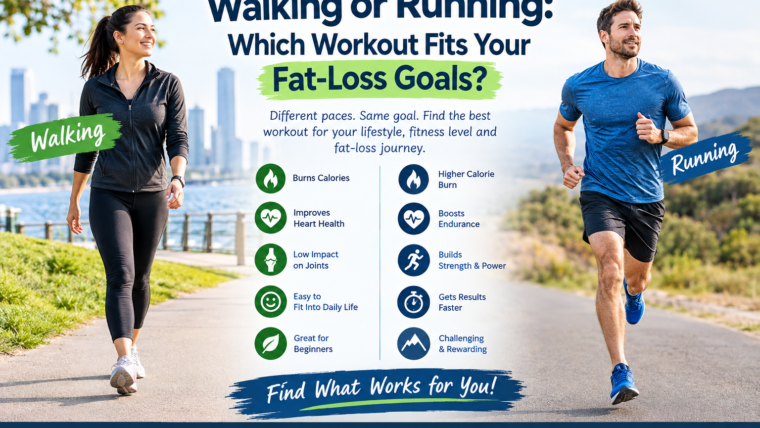
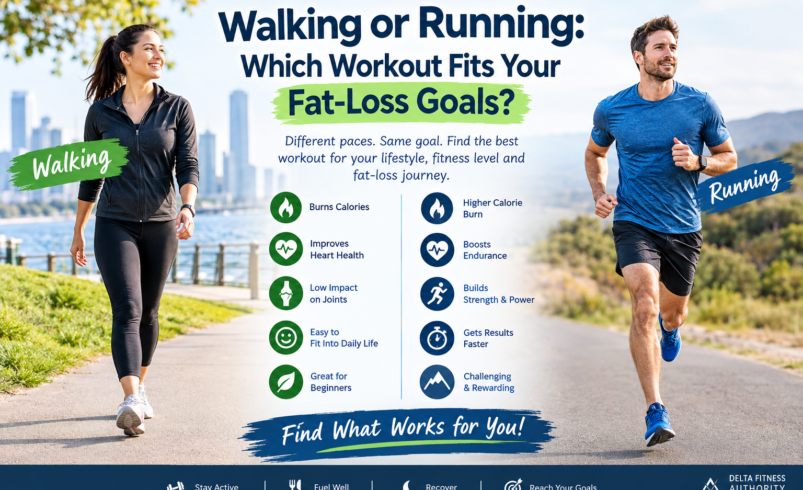
The Walking vs Running for Fat Loss discussion often becomes focused on which activity burns more calories. Running generally requires more energy per minute than walking, but that does not automatically make it the better long-term choice. A workout that you can perform consistently may have greater practical value than a much harder workout that you rarely complete.
According to the CDC, adults should get at least 150 minutes of moderate-intensity aerobic activity each week, or 75 minutes of vigorous-intensity activity, or an equivalent combination of both. Adults should also perform muscle-strengthening activities on at least two days each week.
So, should you walk, run, or combine both?
Let’s look at what each option can offer and how you can build a realistic cardio plan around your fat-loss goals.
Understanding Fat Loss Before Choosing Cardio
Before comparing walking and running, it helps to understand what actually drives fat loss.
Your body constantly uses energy. You burn calories while sleeping, working, digesting food, walking around the house, exercising, and performing everyday activities. When you consistently use more energy than you consume, your body must draw on stored energy.
Physical activity can increase the amount of energy you use. However, nutrition remains an important part of the equation.
The CDC explains that physical activity combined with reducing calorie intake can create the calorie deficit that results in weight loss. It also notes that the amount of activity needed for weight management varies from person to person.
That means a successful fat-loss plan usually involves more than cardio.
It can include:
- Regular aerobic activity
- Strength training
- A balanced eating pattern
- Adequate sleep
- Stress management
- Sufficient recovery
- Consistency over time
Consequently, choosing between walking and running should be viewed as one part of a much bigger picture.
Why Walking Is an Excellent Cardio Option
Walking is one of the simplest ways to increase physical activity.
You do not need a complicated training plan. You can walk outdoors, use a treadmill, walk around a shopping center, explore a local park, or take short walks throughout your workday.
More importantly, brisk walking can qualify as moderate-intensity aerobic activity. The CDC describes brisk walking as an example of moderate-intensity exercise and notes that adults can spread their weekly activity across multiple days and shorter periods.
For someone who is currently inactive, that can make walking a practical starting point.
Instead of saying, “I need to run five miles,” you can start with a 15- or 20-minute walk.
Then, over time, you can increase the pace or duration.
Walking Is Easy to Fit Into Daily Life
One major advantage of walking is flexibility.
You can add movement without necessarily creating a completely separate workout session.
For example, you could:
- Walk for 15 minutes before work.
- Take a brisk lunch break.
- Walk after dinner.
- Use the stairs when appropriate.
- Park farther away from your destination.
- Take a short walk during phone calls.
- Walk on a treadmill while watching a program.
These small changes can add up.
The CDC emphasizes that some physical activity is better than none and that adults can break activity into smaller chunks throughout the week.
Can Walking Help With Fat Loss?
Yes, walking can be part of a fat-loss strategy.
The important question is not whether walking burns calories. It does. The more useful question is whether your overall activity and eating pattern support the energy balance needed for your goal.
Brisk walking increases energy expenditure, and doing it regularly can contribute to a more active lifestyle.
It can also be easier to recover from than high-impact exercise.
That makes it particularly useful for people who want to move frequently without making every session extremely demanding.
For example, someone might walk for 30–45 minutes on several days each week while performing strength training twice weekly.
That can create a balanced foundation.
Running Provides More Intensity
Running changes the equation because it is more demanding.
According to the 2024 Adult Compendium of Physical Activities, jogging and running have different MET values depending on speed and intensity. For example, the Compendium lists general self-selected jogging at 7.5 METs, running at 4–4.2 mph at 6.5 METs, and faster running at substantially higher values.
METs are standardized estimates used to describe the energy demands of physical activities. They are useful for comparing activities, but they should not be treated as an exact prediction of how many calories an individual will burn.
Still, the basic principle is clear: as running intensity increases, energy expenditure generally increases as well.
That is one reason running can be attractive to people who have limited time.
A shorter running session can provide a vigorous workout without requiring a very long exercise period.
Why Running Can Be Useful for Fat Loss
Running can help increase overall energy expenditure while also challenging your cardiovascular fitness.
It may be particularly appealing if you:
- Enjoy running.
- Already have a fitness foundation.
- Prefer shorter, harder workouts.
- Want to improve your endurance.
- Like outdoor exercise.
- Have enough recovery time between sessions.
However, running is not automatically the best choice simply because it is harder.
Higher intensity also means greater physical demands.
If you suddenly go from very little exercise to running several miles multiple times a week, your body may not have enough time to adapt.
A gradual approach is usually more practical.
Walking vs Running for Fat Loss: What Burns More?
This is probably the most common question in the entire debate.
Generally, running burns more energy per minute than walking because running is more intense.
However, duration matters.
Imagine two workouts:
Workout A: 25-minute run
Workout B: 60-minute brisk walk
The running workout is more intense, but the walking session lasts more than twice as long.
This is why comparing only calories per minute can create an incomplete picture.
Your total weekly activity matters too.
Someone who walks consistently five or six days a week may accumulate considerably more movement than someone who runs occasionally.
The Compendium’s activity values also demonstrate that walking itself covers a range of intensities, from slower walking to brisk and uphill walking.
So, rather than asking which activity burns more per minute, ask:
Which activity can I perform consistently at a useful intensity and volume?
Why Consistency Matters More Than Workout Difficulty
One of the biggest mistakes people make when starting a fat-loss program is trying to do too much too quickly.
They may begin with intense runs every day, dramatically reduce food intake, and expect rapid results.
Unfortunately, that approach can be difficult to maintain.
A more sustainable routine might look less dramatic but work better as a lifestyle.
For example:
- Monday: Brisk walk
- Tuesday: Strength training
- Wednesday: Walk/run
- Thursday: Easy walk
- Friday: Strength training
- Saturday: Longer walk or run
- Sunday: Recovery
The exact schedule is less important than whether it fits your life.
The CDC notes that people who lose weight gradually, at about 1–2 pounds per week, are more likely to keep it off than those who lose weight more quickly.
That is a useful reminder that fat loss is a process rather than a short competition.
The best cardio routine is the one you can perform consistently, recover from properly, and continue long after the initial motivation disappears.
The Case for Combining Walking and Running
For many people, the answer does not have to be walking or running.
A combination can provide the advantages of both.
Walking can provide lower-intensity movement on easier days, while running can provide higher-intensity training when you are ready for it.
For example:
Monday: 30-minute brisk walk
Tuesday: Strength training
Wednesday: 20-minute walk/run
Thursday: Easy 25-minute walk
Friday: Strength training
Saturday: 30-minute run or walk/run
Sunday: Longer relaxed walk
This type of schedule gives you different levels of intensity throughout the week.
It can also make exercise more interesting.
Walk-Run Intervals Are a Great Middle Ground
If you are interested in running but are not ready for continuous running, try intervals.
A beginner-friendly session could look like this:
30-Minute Walk-Run Workout
5 minutes: Easy walking
2 minutes: Brisk walking
1 minute: Easy jogging
Repeat the brisk-walking and jogging pattern several times.
5 minutes: Easy walking cooldown
As your fitness improves, you can gradually increase the jogging intervals.
For example:
Weeks 1–2: 1 minute jogging / 2 minutes walking
Weeks 3–4: 2 minutes jogging / 2 minutes walking
Weeks 5–6: 3 minutes jogging / 2 minutes walking
The progression does not have to follow this exact schedule. Your body, experience, and recovery should determine how quickly you progress.
How Much Cardio Do You Actually Need?
For general health, the CDC recommends at least 150 minutes of moderate-intensity aerobic activity each week or 75 minutes of vigorous-intensity activity, plus muscle-strengthening activity on at least two days.
The federal Physical Activity Guidelines also identify 150–300 minutes of moderate-intensity aerobic activity per week as the range associated with substantial health benefits, alongside muscle-strengthening activities on two days.
However, fat loss is not governed by a single magic number.
The CDC points out that people vary considerably in how much activity they need for weight management and that losing weight and keeping it off may require more activity unless food intake is also adjusted.
Therefore, use the guidelines as a foundation rather than treating them as a guaranteed fat-loss formula.
What If You Are Completely New to Exercise?
If you have been mostly inactive, walking can be an excellent first step.
Start small.
Try:
- 15–20 minutes of walking
- 3–5 days per week
- Comfortable or moderately brisk pace
After a few weeks, you might increase the duration.
Then you could add hills or faster intervals.
Eventually, if you want to run, introduce short jogging periods.
This approach gives your body time to adapt.
The CDC also advises people who have been inactive and want to begin vigorous-intensity activity to consider speaking with a doctor, particularly when there are health conditions or other relevant concerns.
What If You Already Run?
If running is already part of your routine, you do not need to abandon it.
Instead, consider whether adding walking could improve your overall training.
Walking can be useful:
- Between harder sessions
- On recovery days
- For additional daily movement
- Before or after strength training
- When you want a lower-intensity session
This approach can help prevent every workout from becoming a high-stress session.
Your weekly plan does not need to be intense from Monday through Sunday.
Why Recovery Matters
Exercise creates stress.
Adaptation happens when your body has enough time and resources to recover from that stress.
Running can be especially demanding because of its repetitive impact and higher intensity.
If you notice persistent pain, unusual fatigue, declining performance, poor sleep, or a lack of motivation, consider whether your training load is too high.
A recovery day is not a wasted day.
Walking gently can be appropriate for some people on easier days, but recovery should still mean recovery.
If you have persistent pain or a medical concern, consult an appropriate healthcare professional rather than attempting to exercise through it.
Cardio Is Only One Piece of the Fat-Loss Puzzle
It is easy to become obsessed with cardio when trying to lose body fat.
However, a balanced fitness plan should include more than running or walking.
Strength Training
Adults are advised to perform muscle-strengthening activity at least two days each week.
Strength training can include:
- Squats
- Lunges
- Push-ups
- Rows
- Resistance-band exercises
- Free weights
- Weight machines
- Bodyweight movements
Nutrition
Your food intake remains important because fat loss requires an appropriate energy balance over time.
The CDC states that physical activity combined with reducing calorie intake creates the calorie deficit associated with weight loss.
Sleep
Sleep is also part of a healthy weight-management lifestyle. The CDC includes sufficient sleep and stress management among the factors that support healthy weight management.
Consequently, cardio should complement these habits rather than replace them.
How to Make Walking More Effective
If you enjoy walking but want more challenge, you have plenty of options.
Walk Faster
A faster pace increases intensity.
Add Hills
Hills require more effort and can turn an ordinary walk into a challenging session.
Use a Treadmill Incline
Incline walking can be particularly useful when outdoor terrain is flat.
Increase Duration
Gradually adding time can increase your weekly activity volume.
Add Intervals
Alternate comfortable walking with faster periods.
For example:
- 5 minutes easy
- 3 minutes brisk
- 2 minutes comfortable
- Repeat
You do not need to run to make walking more challenging.
How to Make Running More Sustainable
If you prefer running, avoid assuming that every run should be hard.
Instead, vary your intensity.
You could have:
Easy run: Comfortable pace
Moderate run: Steady effort
Interval session: Short periods of faster running
Longer easy session: More time at a comfortable pace
This creates variety without demanding maximum effort every time.
Additionally, include easier days and strength training.
A good training plan should leave you feeling capable of doing tomorrow’s activities rather than completely depleted.
How to Know Which Approach Fits You
Ask yourself a few simple questions.
Do You Enjoy Walking?
If yes, make it part of your routine.
Do You Enjoy Running?
If yes, gradually build your running ability.
Are You Short on Time?
Running can provide a vigorous workout in less time, assuming your body is ready for it.
Are You New to Exercise?
Walking can provide a practical starting point.
Do You Need More Daily Movement?
Walking is easy to add throughout the day.
Do You Want Variety?
Combine walking, running, and strength training.
These questions can help you choose a routine based on your actual life instead of following a generic fitness trend.
A Sample Fat-Loss Cardio Plan
Here is an example of how someone with an established fitness base might combine walking and running:
Monday — Brisk Walk
30–40 minutes at a moderate pace.
Tuesday — Strength Training
Full-body resistance training.
Wednesday — Run/Walk Intervals
25–30 minutes with alternating jogging and walking.
Thursday — Easy Walk
20–30 minutes at a comfortable pace.
Friday — Strength Training
Full-body resistance training.
Saturday — Longer Cardio Session
40–60 minutes of walking, running, or a combination.
Sunday — Recovery
Rest or gentle movement.
This is an example, not an individualized medical or training prescription. Beginners may need less volume, while experienced exercisers may tolerate more.
Common Cardio Mistakes to Avoid
Doing Too Much Too Soon
Your enthusiasm may be high at the beginning, but your body still needs time to adapt.
Thinking Sweat Equals Fat Loss
Sweating is primarily your body’s way of regulating temperature. It is not a direct measurement of how much body fat you have lost.
Ignoring Food Intake
Exercise is important, but nutrition also influences energy balance.
Skipping Strength Training
Cardio should not completely replace resistance exercise.
Comparing Yourself With Others
Someone else may be able to run five miles comfortably. That does not mean you should start there.
Expecting Overnight Results
Fat loss takes time.
Focus on habits that you can repeat for months.
Tracking Progress Beyond the Scale
Body weight can be useful, but it is not the only way to measure progress.
Consider tracking:
- Weekly workout frequency
- Walking or running duration
- Distance
- Running pace
- Resting heart rate trends
- Strength improvements
- Waist measurements
- Energy levels
- Sleep quality
- How your clothes fit
For example, perhaps your weight changes slowly but your 30-minute walk becomes much easier.
That is still progress.
Likewise, completing a mile at a comfortable pace when you previously struggled to jog for five minutes represents a meaningful fitness improvement.
What About Calorie-Burning Watches?
Fitness watches and cardio machines can be helpful for tracking trends, but calorie estimates should not be treated as perfectly accurate.
The 2024 Compendium provides standardized MET values for activities, but these are population-level estimates rather than personalized calorie measurements.
Therefore, do not feel that you need to “earn” food based on the number displayed on a watch.
Instead, look at broader patterns:
- Are you becoming more active?
- Are you consistent?
- Is your nutrition aligned with your goal?
- Are you recovering?
- Are your fitness levels improving?
Those questions provide more useful context.
When Walking May Be the Better Choice
Walking may be especially practical if:
- You are beginning an exercise program.
- You want lower-intensity movement.
- You have limited running experience.
- You enjoy longer workouts.
- You want to stay active on recovery days.
- You need exercise that fits around a busy schedule.
- You simply prefer walking.
There is no prize for choosing the hardest possible workout.
If walking keeps you active consistently, it can be a valuable part of your fitness strategy.
When Running May Be the Better Fit
Running may suit you if:
- You already have a reasonable fitness base.
- You enjoy vigorous exercise.
- You prefer shorter sessions.
- You want to develop running endurance.
- You have gradually adapted to running.
- You can recover adequately between workouts.
Again, the goal is not to prove that running is superior.
The goal is to use the activity that fits your circumstances.
Why a Combination Often Makes Sense
For many people, combining both activities provides a practical balance.
Walking gives you opportunities for easier movement.
Running provides higher-intensity sessions.
Together, they allow you to vary your training load.
For example, you could run twice a week, walk three times, strength train twice, and leave one day for recovery.
That gives you multiple ways to stay active without asking your body to perform at maximum intensity every day.
You do not have to choose between being a walker and being a runner. Your fitness routine can change with your goals, experience, schedule, and recovery.
Final Thoughts
So, what is the best cardio for fat loss: walking, running, or a combination of both?
There is no universal answer.
Running generally has a higher energy cost per minute than walking, while walking is often easier to perform for longer periods and incorporate into everyday life. The 2024 Adult Compendium demonstrates the wide range of energy demands across different walking and running intensities.
For beginners, walking can be a realistic way to start moving more.
For experienced exercisers, running can provide an efficient and challenging form of cardio.
For many people, however, the most practical approach is to combine them.
The CDC recommends at least 150 minutes of moderate-intensity activity or 75 minutes of vigorous-intensity activity each week, alongside muscle-strengthening activity on two days.
If fat loss is your goal, remember that cardio is only one part of the process. Nutrition, sleep, strength training, recovery, and consistency all matter.
If your Walking vs Running for Fat Loss research has left you wondering which option to choose, start with the activity that fits your current fitness level and lifestyle.
Then build gradually.
Walk more when you need an easier session.
Run when you are ready for greater intensity.
Combine both when you want variety.
Most importantly, choose a routine that you can realistically maintain.
Because the most useful workout is not necessarily the one that leaves you exhausted. It is the one that helps you become more active, more capable, and more consistent over time.
FAQs
1. Is walking or running better for fat loss?
Both can support fat loss. Running generally uses more energy per minute, while walking can be easier to perform frequently and for longer periods. Your overall calorie balance, nutrition, activity level, and consistency are important factors.
2. How much cardio should I do for fat loss?
There is no single amount that guarantees fat loss. For general health, the CDC recommends at least 150 minutes of moderate-intensity aerobic activity or 75 minutes of vigorous activity each week, plus muscle-strengthening activity on at least two days. Individual weight-management needs vary.
3. Can I lose fat by walking every day?
Walking can contribute to fat loss when it forms part of an overall routine that creates an appropriate energy deficit. Brisk walking also counts as moderate-intensity physical activity. Nutrition and total activity levels remain important.
4. Should I run every day to lose weight?
Not necessarily. Running every day is not required for fat loss or general health. A balanced program can include running, walking, strength training, and recovery days. Beginners should increase running gradually rather than suddenly adding large amounts of high-intensity exercise.
5. Is combining walking and running effective?
Yes. Combining the two can provide different training intensities throughout the week. Walking can be used for easier or longer sessions, while running can provide more vigorous exercise. A combination can also make a routine more varied and sustainable.