


Not everyone needs a wedding planner. That is an odd thing to read on a page about hiring one, but it is true, and a good planner will tell you the same.
What matters is whether your particular wedding, in this particular hall, has enough moving parts to justify handing the work to someone else. If you are weighing up the Clifton Marquee wedding planner in Karachi, this is a plain way to decide.
What the venue already covers
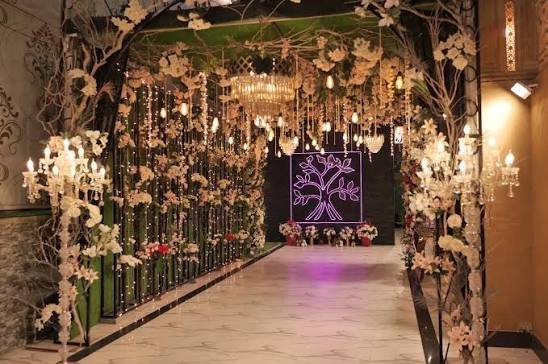
Start with what you get for the booking. Listings for The Clifton Marquee describes an air-conditioned hall with its own catering, a bridal room, a customizable stage, a sound system, male servers, fresh flower decoration, valet parking, and a standby generator. Details vary between listings and change over time, so confirm each item with the hall.
If most of that comes as a package, a lot of the visible work is done. You are not building a stage from nothing or hunting for a kitchen. That is the case for running things yourself.
What nobody is responsible for
Here is the catch. Everything above belongs to the venue, and the venue’s responsibility ends at its own services. The pieces in between belong to nobody, unless you assign them.
| Area | The venue handles | Still needs an owner |
|---|---|---|
| Food | Cooking and serving | Timing dinner to the program |
| Stage | Basic setup and lighting | Matching your approved design |
| Sound | Equipment and operator | Cues for speeches and entrances |
| Parking | Valet service | Guiding VIPs and elderly guests |
| Guests | Seating space | The seating plan and late arrivals |
| Vendors | Venue staff | Your outside photographer, decorator, and artists |
| Schedule | The hall booking | The minute-by-minute plan for the evening |
Every row in the right-hand column is a job. Somebody does it, whether you hire for it or not. When nobody is named, it usually ends up with the bride’s brother or the groom’s mother, in their best clothes, in the middle of the evening.
When you can probably go without
You may be fine without a full planner if most of these are true:
- Your guest list is modest and well known to you.
- You are using the venue’s own catering and decor with little customization.
- You have a reliable person in the family who enjoys organizing and will be free on the day.
- You do not have outside artists, a long stage program, or a lot of vendors to coordinate.
- Nobody in the family is likely to argue about the schedule.
Even then, many families hire a day of coordinator, someone who steps in for the final stretch and runs the evening, without taking on the months of planning. It is a sensible middle option, and it is worth asking any planner whether they offer it.
When a planner starts to pay for themselves
The picture changes when the wedding gets bigger or more complicated. Here are the usual signs.
Several functions in one week. Coordinating a mehndi, a baraat, and a valima across different venues means shared vendors, transport between locations, and repeated changeovers. The planning load rises sharply with each event.
Outside vendors in a hall with its own team. If you bring a decorator, photographer, or sound team, someone has to make sure they work with the venue’s staff and are not around them. That conversation is much easier when a planner has already built the relationship.
A large, mixed guest list. More guests mean more seating decisions, more late arrivals, and more people who need a direct answer. Capacity listings for the hall differ widely, so a bigger event also needs a firm, written figure for your layout.
A heavy stage program. Performances, speeches, and family tributes need cues. Without them, the night drifts.
You live elsewhere. Many families plan Karachi weddings from abroad or from another city. A planner in the city can visit the hall, check vendors in person, and report back with photographs, which is hard to do remotely.
A word on cost
Families often ask what a planner costs before they ask what a planner does, and that order causes trouble. Fees vary widely, from a flat amount for a day of coordination to a percentage of the overall budget for full planning, and the only way to compare quotes is to compare what each one actually includes.
Look at the work being bought. How many meetings are included? Are vendor negotiations part of the fee? Is the planner or an assistant on site for the whole evening? A lower quote that covers only the day itself is not the same product as a higher one that covers months of preparation.
It also helps to think about what a planner can save as well as what it costs. A person who knows which vendors deliver on time and who can push back on a padded quote can sometimes recover a good part of their fee. That is not guaranteed, so ask for examples instead of accepting the claim.
How to judge whether a planner is worth it
If you decide to hire, treat it like any other purchase. Ask for a written scope that spells out what is included, what is not, and what the fee covers. Ask whether they have worked at this hall, and listen for specifics. A planner who can describe how the room fills up, where guests queue, or which side the sound carries to has probably been there.
Ask who will be present on the day and whether it is the same person you meet in the first call. Ask how they communicate during the month before the wedding. Weekly updates and a shared checklist are a good sign.
Be wary of anyone who promises that nothing will go wrong. Weddings are live events, and something always shifts. What you want is someone who has a plan for it.
Marcem Events offers wedding planning for this venue, and you can ask them the same questions as everyone else. Compare the answers with at least one other planner before you decide.
Conclusion
Some weddings run well on family goodwill and the venue’s own team. Others need a clear owner for every gap between vendors, and The Clifton Marquee wedding planner in Karachi can fill that role. Look at the table above and be honest about how many rows would land on you, then decide. The right answer depends on your guest list, your program, and how much of the day you want to spend working. If you want to enjoy your own wedding, help is rarely a bad idea.