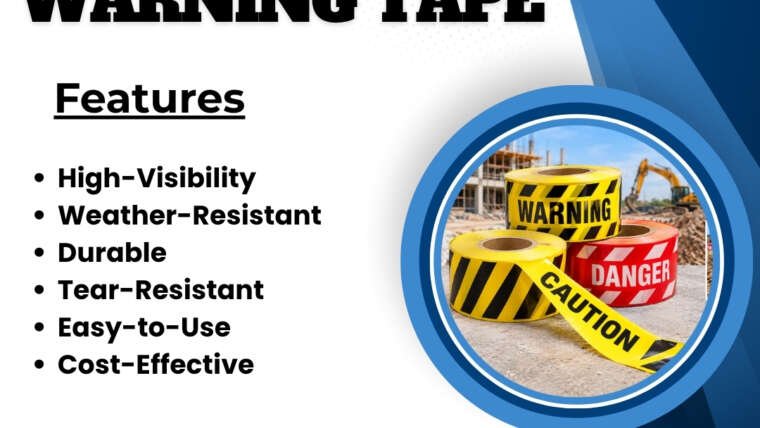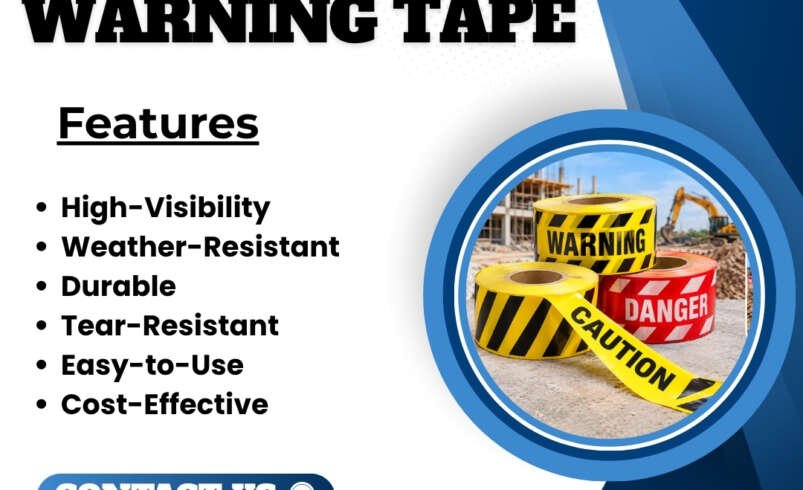

Warning Tape is a significant safety product that helps to mark out the presence of dangerous or hazardous zones, restricted zones, the existence of underground utilities, and any place that requires additional care. Warning tapes can be found on construction sites, roadwork sites, factories, warehouses, power supply systems, and various public places. The primary function of this product is quite simple: it informs people that there is a possibility of danger ahead. Warning tapes are mostly made of plastic materials, including polyethylene, as plastic products are light, flexible, and appropriate for various work environments. Warning tapes are usually marked by bright colors: red, yellow, black, white, and orange; some types are accompanied by printed information or safety symbols.
Important Features and Material Properties
Warning tapes possess a range of features, which ensure their visibility and performance under different environmental conditions. Among them, there is high color brightness, which makes it possible to recognize danger zones from some distance. Clear print is just as important since labels like “Danger,” “Caution,” “Electrical Cable,” “Do Not Enter” specify the particular type of danger. Polyethylene is often used since it ensures flexibility, moisture resistance, and tear resistance. Thickness depends on the intended application of the tape. Temporary indoor tape is one example, whereas others are meant for outdoor conditions, during which the tape will be exposed to direct sunlight, water, and changes in temperature. UV stabilization is an option, which will help to keep tape functioning correctly for a longer period under direct sunlight exposure.
Various Types and Available Options
Warning tapes are available in various types depending on the intended use. Barricade warning tape can be used in blocking entry into construction sites, maintenance areas, accident scenes and other restricted areas. They are normally printed with caution messages and are rolled up for easy handling. Warning tape for underground utilities is placed above buried utilities such as electrical cables, gas pipes, water lines or communication networks to warn workers while excavating. Some underground warning tapes have detectable components which make it possible to detect the buried utility lines using detection devices. Non-detectable warning tapes are also available and can only be used as visual warnings without having locating abilities. Buyers who wish to make international purchases could approach a Warning Tape Exporter India for exporting packaging, documentation, and shipment information.
Uses of Warning Tape in Various Industries
Warning tapes have found numerous applications in various industries to promote safety. For example, in the construction industry, these tapes may be used for demarcation of the excavation zones, incomplete building, falling objects, and restricted working zones. Road maintenance crews also find these warning tapes helpful to distinguish repair zones and keep pedestrians away from the construction sites. Electrical contractors may use specific warning tapes to highlight the buried electric cables in order to reduce the risk of damage to the power cables due to digging. There are special underground identification tapes for the identification of water supply and gas pipeline installations. Factories and warehouse owners may apply such tapes to machinery zones, storage zones, maintenance zones, and hazardous zones. Barricade tapes may be used for guiding visitors during public events.
Advantages of Warning Tape
The first advantage of the tape is its ability to make a quick signal that people are able to notice without detailed instruction, provided that the colour and print message are bright enough. Besides, its lightness allows to carry, cut, set up and tear off the tape easily. Warning tape is also available in roll versions, enabling the workers to work with any needed length without special tools. Plastic tapes provide good moisture protection properties and can be used both indoors and outdoors. Special printing enables companies to identify different threats and utility services. Suitable tape in case of underground works can also be used as one more warning signal before the employees come across the infrastructure below. This can minimize the risk of accident, service interruption and costs of repairs.
Manufacturing and Quality Factors
Warning tape manufacturing is carried out using plastic film extrusion and printing processes. Extrusion involves heating up polyethylene granules and molding them into thin films. The films are then cooled and processed to obtain a film of the required thickness and width. Thereafter, printing machines print the required warning, symbols or identification information on the films. The printed films are cut to appropriate sizes and rolled up for packaging. During the process, some manufacturers carry out tests to check for factors like thickness, tensile strength, color uniformity, printing quality, length of the roll and surface finish. Some specialized products for underground use could have special properties like detectability through metallic composition. The printing on the products should be legible under the working conditions.
Selection, Storage, and Purchasing Considerations
The right selection of warning tapes depends on the application requirement as well as the protection requirement. Buyers need to think about the type of material, thickness, width, color, printing, roll length, and environmental factors. For temporary barricades, visibility and tear resistance could be the primary considerations. For underground utility lines, the tape must clearly indicate the service and conform to the installation needs of the project. Where locating the buried utility lines is the consideration, then the detectable warning tapes would be the ideal choice. Companies wishing to purchase warning tapes could get in touch with a Warning Tape Supplier India to know more about the specifications, colors, and printing of customized warning tapes.
Conclusion
Warning Tape is an important safety tool used in construction, road repair, electricity industry, pipeline laying, industries, and other areas. Bright colors and inscriptions on warning tapes make it possible to warn about potential dangers, restricted areas, and information about underground utilities. There are different types of warning tapes depending on their purpose of temporary blocking and long-term underground utility marking. It is very important to choose the right type. Such criteria as material, thickness, print, UV protection, and other parameters need to be taken into account when choosing a warning tape. Warning tapes will function effectively if they are used together with other methods of warning such as signs, barricades, training, and right work process.
Frequently Asked Questions(FAQs)
1. In which scenarios is the Warning Tape typically used?
The Warning Tape is used to demarcate hazardous areas, restricted areas, construction site, and underground utility lines to inform people.
2. What is the material from which the Warning Tape is made?
Polyethylene material is widely used owing to its lightweight, flexibility, water-resistant characteristic and application in safety marking.
3. In what ways do barricade tape differ from underground warning tape?
The barricade tape is used to mark temporary restricted areas, whereas underground warning tape is installed above the buried cables or pipeline to warn the excavator workers.
4. Is the Warning Tape applicable in outdoor environment?
Yes, suitable warning tape can be used in outdoor conditions. In case of long exposure to sunlight and weathering effects, buyers need to verify its UV resistance property.
5.Who is the largest exporter of Warning Tape?
Mahira Polyglobal LLP is one of the top manufacturers of warning tapes and provides various tapes used for different purposes such as safety marking and hazard identification.