
Website Developer Freelancer Dubai – Build a Professional Online Presence for Your Business
A professional website helps businesses establish their identity, communicate with customers, and present their products or services online. Whether you operate a startup, a small business, or an established company, your website should make a positive impression while providing visitors with useful information.
Choosing a website developer freelancer in Dubai can help you plan a website according to your business requirements. From selecting the right platform to developing responsive pages and practical features, every stage should contribute to a convenient user experience.
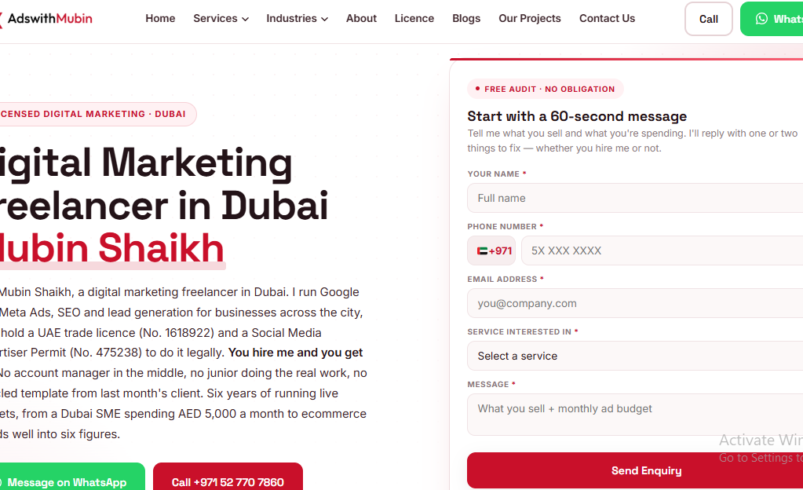
Explore website development services in Dubai to learn more about website development options through Ads With Mubin.
Why Work with a Freelance Website Developer?
A freelance developer can provide a direct working arrangement for businesses planning a new website or improving an existing one. Direct communication can make it easier to discuss requirements, review progress, and coordinate changes.
Some important considerations include:
- Direct communication: Discuss your ideas and project requirements with the developer.
- Flexible planning: Organise development priorities around your business objectives.
- Project-specific features: Identify functionality that supports your products or services.
- Consistent collaboration: Review design decisions and development progress.
- Future flexibility: Plan a website structure that can accommodate additional pages and features.
Before beginning, establish the project scope, estimated timeline, deliverables, and support arrangements.
Website Development Services for Different Business Needs
Every website serves a different purpose. A professional service provider may need informative pages and enquiry forms, while an online retailer may require product catalogues and checkout functionality.
1. Business Website Development
A business website introduces your company and explains what you offer. Common sections include:
- Homepage and company introduction
- About page
- Services or product pages
- Frequently asked questions
- Contact information and enquiry forms
- Blog or news section
A clear layout helps visitors understand your business and find important information.
2. WordPress Website Development
WordPress is a popular content management platform for business websites, blogs, portfolios, and e-commerce projects. It allows website owners to manage pages and publish content through an administrative dashboard.
Development may include theme configuration, customised page layouts, plugin setup, responsive design, and content organisation. The selected tools should match the website’s functionality and maintenance requirements.
3. E-Commerce Website Development
Businesses selling products online may need an e-commerce website with organised product categories and a convenient purchasing process.
Depending on the project, features may include product listings, shopping cart functionality, checkout pages, payment integration, and order management.
A well-structured online store should make it easy for visitors to browse products and understand the next steps.
4. Landing Page Development
A landing page focuses on a particular product, service, or marketing campaign. It generally includes a clear headline, relevant information, supporting visuals, and a call to action.
A dedicated landing page can help visitors understand a specific offer and direct them towards an enquiry or other action.
5. Website Redesign and Improvement
An existing website may need updates to its design, navigation, content structure, or functionality. A redesign can help make the website easier to use and more consistent with the company’s current branding.
Before redesigning, review the existing content, important URLs, and features that need to be retained.
Essential Elements of a Professional Website
A website should combine visual consistency with practical functionality. The following elements deserve attention during development.
Responsive design: The website should display properly on mobile phones, tablets, and desktop screens.
Easy navigation: Menus and internal links should help visitors find important pages without confusion.
Performance optimisation: Efficient code, properly sized images, and suitable hosting can contribute to better loading performance.
Clear content presentation: Headings, paragraphs, and page sections should make information easy to understand.
SEO-friendly structure: Descriptive page titles, meaningful URLs, organised headings, and relevant internal links provide useful search engine optimisation foundations.
Website security: HTTPS, regular backups, software updates, and appropriate access permissions are important security practices.
Contact functionality: Enquiry forms, email links, and contact information should be visible and tested.
Understanding the Website Development Process
A structured process helps keep a website project organised and provides a clear direction from planning to launch.
Step 1: Discuss Business Requirements
Begin by identifying your business goals, target audience, preferred website style, required pages, and essential functionality. This helps establish the project scope.
Step 2: Plan the Website Structure
Create a sitemap showing the main pages and how visitors will navigate between them. Common pages include Home, About, Services, Portfolio, Blog, and Contact.
Step 3: Prepare the Design
The design stage establishes the website’s visual direction. This may include typography, colours, page layouts, navigation, and image placement.
The objective is to create a consistent presentation that reflects your brand and keeps information easy to access.
Step 4: Develop the Website
The approved design is converted into a working website. Depending on the requirements, this may involve platform configuration, page development, contact forms, content management, and other features.
Step 5: Test Important Features
Before launch, review the website across different browsers and screen sizes. Test navigation, links, forms, images, and key functionality to identify potential issues.
Step 6: Launch and Maintain
After testing, prepare the website for launch. Future maintenance may include backups, software updates, security checks, content changes, and technical improvements.
Website Development for Dubai Businesses
Dubai has businesses operating across industries such as retail, hospitality, real estate, education, technology, and professional services. Each industry has different website requirements.
For example:
- Consultants: Service descriptions, professional information, and consultation enquiry forms.
- Retail companies: Product catalogues, online shopping, and customer information.
- Restaurants: Menus, location details, and reservation information.
- Real estate businesses: Property listings, image galleries, and enquiry options.
- Startups: Brand introductions, product information, and clear calls to action.
Understanding the target audience helps determine which pages and features deserve priority.
How to Select the Right Website Developer Freelancer in Dubai
Before hiring a developer, review their experience and working approach. Consider these points when evaluating a potential project partner:
- Portfolio: Review relevant website examples and previous projects.
- Technical knowledge: Discuss the platform and technologies suitable for your requirements.
- Project scope: Confirm the pages, features, revisions, and deliverables included.
- Communication: Establish how progress updates and feedback will be handled.
- Timeline: Agree on milestones and estimated completion dates.
- Website ownership: Clarify access to the domain, hosting, website files, and administrator accounts.
- Maintenance: Discuss updates, technical support, and post-launch responsibilities.
Clear expectations can help both parties manage the project more effectively.
Explore Website Development with Ads With Mubin
A business website should communicate your brand clearly and provide visitors with useful ways to explore your services or products. Whether you need a new company website, a WordPress platform, an online store, or a redesign, the development approach should match your requirements.
Visit Ads With Mubin’s website development freelancer page to explore the available information and consider the next steps for your website project.
Conclusion
Choosing a suitable website developer freelancer in Dubai starts with understanding your business objectives, technical requirements, and expectations. A well-planned website should combine responsive design, clear navigation, useful content, and reliable functionality.
Whether you are creating a new business website or improving an existing platform, a structured development process can help establish a professional online presence. Explore website development services in Dubai to learn more about Ads With Mubin.