
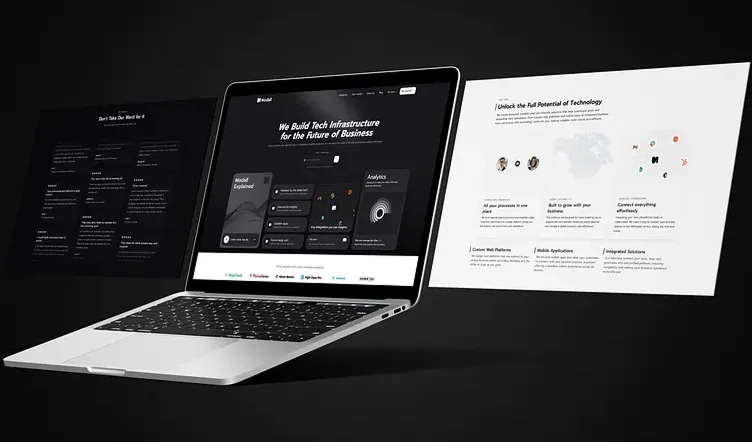

Your website is often the very first thing a potential customer sees before they ever talk to you directly. If it loads slowly, feels outdated, or breaks on mobile, people leave before they even give your business a real chance. Saudi businesses face an extra layer of complexity too — supporting both Arabic and English audiences, local customer expectations, online payments, and needs that shift as the business grows.
Getting the development approach right upfront avoids a lot of these headaches down the line. Real website development services Saudi Arabia help businesses build something that actually looks professional, functions smoothly, and supports genuine business goals — not just puts a website online because everyone else has one.
Start With What You Actually Want the Site to Do
Before picking a developer, figure out what you actually want the website to achieve. Skip this, and you’ll end up comparing quotes that don’t even cover the same scope.
Different businesses need genuinely different things. A consulting firm probably needs service pages and lead forms. An ecommerce store needs product pages, checkout, and payment processing. A restaurant needs menus, online ordering, and clear location info. A real estate company needs property listings with real search filters. A larger organization might need customer portals tied into internal systems.
Worth asking yourself early: who’s actually going to use this site? What should visitors do once they land here? What info do customers genuinely need to see? Are you selling products directly? Does this need to connect with other systems you’re already running?
Clear answers here help developers recommend the right features — and honestly save you from paying for functionality you’ll never actually use.
Pick the Development Approach That Actually Fits
Not every business needs identical technology underneath.
A smaller company often does fine with a CMS like WordPress. An online store usually needs a proper ecommerce platform built for that specific job. A larger company might genuinely need custom development tied into internal software that off-the-shelf platforms just can’t handle.
WordPress works well when you’re managing content regularly — it’s got a huge ecosystem of themes and plugins to draw from.
Ecommerce sites need more than nice product photos. Real product management, shopping carts, payment processing, order handling, security, and customer accounts all need to work together seamlessly.
Custom development makes sense when your business genuinely needs unique functionality or complex integrations that standard platforms just weren’t built to handle efficiently.
A genuinely good developer explains the real tradeoffs of each option honestly, rather than just defaulting to whatever they’re most comfortable building. When comparing website development services Saudi Arabia, focus on whether the technology actually matches what your business needs — not what’s easiest to pitch.
Build With Saudi Customers Actually in Mind
Local customers often have different expectations than a generic international audience. A Saudi business website needs real thought around language, mobile usage patterns, cultural context, and what local customers actually expect to see.
If you’re serving both Arabic and English speakers, the site needs a genuinely proper bilingual experience — not just a translation plugin bolted on afterward. Arabic content needs real right-to-left layout work, and developers should actually test navigation, forms, buttons, menus, product pages, text alignment, and mobile layouts specifically in Arabic, not just assume it’ll work because the English version does.
Simply translating English text word-for-word doesn’t create a genuinely good Arabic experience — it just creates a translated version of something built for a different audience.
Local business details matter too. Make your contact info easy to find — service areas, phone number, email, working hours, whatever’s actually relevant. Clear, easy-to-find local info makes customers genuinely more comfortable reaching out.
Speed, Security, and Mobile Come Before Looking Impressive
A site needs to actually work well before it needs to look impressive. That order matters more than people realize.
Most visitors are on their phones now, so responsive design should be baked in from the start of development, not tested as an afterthought right before launch.
A reliable site needs fast loading, mobile-friendly layouts, secure connections, navigation that actually makes sense, properly optimized images, forms people can actually use, hosting that doesn’t buckle under real traffic, and regular backups running consistently.
Security matters even more for sites collecting customer info or handling payments directly. Developers need to follow real security practices and keep every software component genuinely updated, not just at launch.
Performance affects the actual experience too. Oversized images, unnecessary scripts, weak hosting, sloppy code — all of it drags load times down. An online store with hundreds of product photos, for instance, needs those images properly optimized rather than loading massive files for every single visitor regardless of their connection speed.
SEO Needs to Be Part of Development, Not an Afterthought
SEO shouldn’t be something bolted on after the site’s already built. That approach almost always leaves gaps that are harder to fix later.
Developers need to build a structure search engines can actually crawl and understand from the ground up. That means clean URLs that actually describe the page, proper heading structure that organizes content logically, genuine mobile optimization across screen sizes, relevant metadata on important pages, internal linking that connects related content sensibly, and technical basics like redirects, indexing, canonical URLs, sitemaps, and structured data handled correctly where it fits.
Real website development services Saudi Arabia factor all of this in during the actual build, rather than treating it as a separate project you tackle after launch when fixing it costs more time and money.
Think Ahead to Integrations and Where You’re Headed
A website might start simple, but business needs rarely stay static for long.
Down the line, you might need this connected to CRM software, an ERP system, payment gateways, inventory management, email marketing tools, analytics platforms, or customer support systems.
An ecommerce business, for example, might manage orders manually at first. As sales pick up, automated inventory and order management genuinely becomes necessary rather than optional.
Talk through future requirements with your developer before the build even starts. A genuinely scalable structure makes future additions smoother and cuts down on the need for an expensive rebuild down the road. Worth asking directly how they’d handle new features, growing traffic, security updates, and third-party integrations as your needs evolve.
Actually Choosing a Development Company
Picking a development company takes more than comparing three price quotes side by side.
Look into their previous projects, actual industry experience, technical depth, how they communicate throughout a project, realistic timelines, security practices, ongoing support options, and what maintenance plans actually look like.
Ask for a genuinely detailed proposal — one that clearly spells out what you’re getting and what costs extra beyond the base quote. This matters more than people expect; vague scopes tend to balloon in cost later.
Get clarity on ownership too. Make sure you understand exactly who controls the domain, hosting account, website files, content, and every other important asset once the project’s done. A trustworthy provider communicates clearly and explains technical decisions in plain terms, not jargon designed to sound impressive.
FAQs
How much do website development services actually cost in Saudi Arabia?
Varies quite a bit based on site size, design complexity, features, platform choice, integrations, content volume, and development time. A basic business site usually costs far less than a custom ecommerce platform built from scratch.
How long does building a website actually take?
A basic site might take several weeks. Larger, more complex projects can stretch into several months depending on features, content prep, design approval rounds, integrations, and testing.
Should a Saudi business website support both Arabic and English?
If you’re serving both language groups, yes — bilingual support genuinely improves accessibility and usability. The Arabic version needs a proper RTL layout, not just translated text sitting in an English-first design.
Is WordPress a solid choice for Saudi businesses?
Often, yes, for many business sites. But it needs to genuinely match your security, performance, content management, integration, and scalability requirements — not just be picked because it’s familiar.
Does website development typically include SEO?
Depends on the provider. Some bake in basic SEO setup, others offer it as a completely separate service. Worth confirming exactly what technical SEO work is included before signing anything.
Conclusion
A genuinely successful business website needs more than an attractive design sitting on top. It needs to support your actual business goals, work smoothly on mobile, load quickly, protect customer information properly, and make it genuinely easy for visitors to take action once they arrive.
When comparing website development services Saudi Arabia, weigh technical expertise, real understanding of the local market, security practices, SEO groundwork, scalability, and what post-launch support actually looks like. Don’t pick a provider purely because they quoted the lowest number.
Start by getting genuinely clear on your business goals and what your customers actually need. Then choose a development partner who can build something that works well today and has room to grow alongside your business over time.