
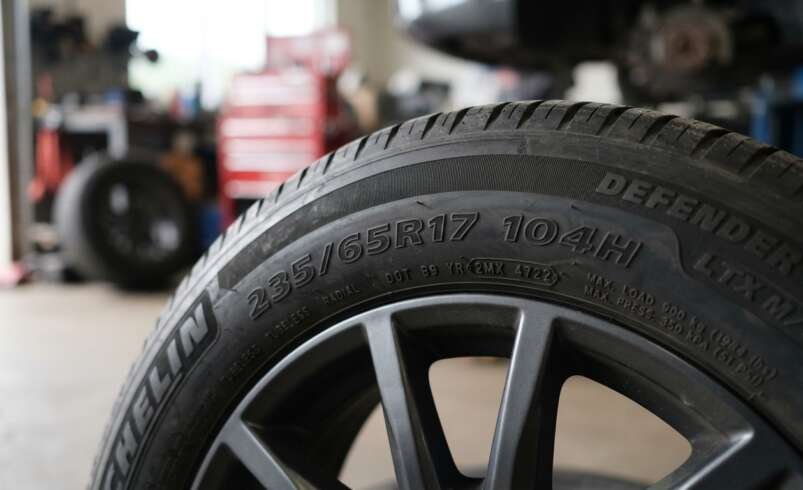

Take a close look at the sidewall of your car’s tyre and you’ll notice a string of numbers and letters that probably means very little at first glance — something like 215/55R17 94V. To most drivers, it looks like a random code, but each part of it actually tells you something important about the tyre: its width, height, construction, fit, and performance capabilities.
Understanding this code isn’t just useful trivia. It helps you buy the correct replacement tyres, avoid costly mistakes, and have more confident conversations with your mechanic or tyre shop. Whether you’re replacing a single tyre or shopping around at the best tyre shop in Mussafah for a full set, knowing how to read this code puts you in a much stronger position. Here’s a simple breakdown of what each part actually means.
Breaking Down the Tyre Code
Let’s use the example 215/55R17 94V and go through it piece by piece.
215 — Tyre Width (in millimetres)
The first number represents the tyre’s width, measured in millimetres from one sidewall edge to the other. In this example, the tyre is 215mm wide.
A wider tyre generally offers more grip and a larger contact patch with the road, but it can also mean slightly higher rolling resistance and a marginal impact on fuel economy. This number is largely determined by your vehicle’s design, so it’s not something to change casually without professional advice.
55 — Aspect Ratio (Sidewall Height)
The number after the slash — 55 in this case — is the aspect ratio. It represents the tyre’s sidewall height as a percentage of its width. So here, the sidewall height is 55% of 215mm.
A lower aspect ratio means a shorter, stiffer sidewall, which is common on performance vehicles for sharper handling. A higher aspect ratio means a taller sidewall, which usually provides a more comfortable ride and slightly better protection against pothole damage, since there’s more cushioning between the rim and the road.
R — Construction Type
The “R” stands for radial, which refers to how the internal layers of the tyre are constructed. Radial construction is the standard for almost all passenger vehicles today, so you’ll see this letter on the vast majority of tyres sold.
17 — Rim Diameter (in inches)
This number indicates the diameter of the wheel rim the tyre is designed to fit, measured in inches. In this example, the tyre fits a 17-inch rim. This is one of the most critical numbers to get right — a mismatch here means the tyre simply won’t fit your wheel.
94 — Load Index
The load index refers to the maximum weight each tyre can safely support when properly inflated. This isn’t shown in kilograms directly; instead, it corresponds to a standardized chart. For example, a load index of 94 typically corresponds to a maximum load of around 670kg per tyre, though it’s always worth confirming exact figures with your tyre supplier if you’re unsure.
This number matters more than many drivers realize, especially if you frequently carry heavy loads, tow trailers, or drive an SUV that’s often fully loaded with passengers and cargo. Fitting tyres with a lower load index than recommended can be unsafe and may void certain warranties.
V — Speed Rating
The final letter indicates the tyre’s speed rating — the maximum speed it’s designed to handle safely under proper conditions. Each letter corresponds to a specific speed:
- S – up to 180 km/h
- T – up to 190 km/h
- H – up to 210 km/h
- V – up to 240 km/h
- W – up to 270 km/h
- Y – up to 300 km/h
While most everyday driving in Abu Dhabi rarely approaches these limits, the speed rating still matters. It reflects the tyre’s overall engineering and heat tolerance, since higher-rated tyres are typically built with materials that handle sustained heat and stress better — a genuinely useful trait given how hot road surfaces get during summer.
Why This Information Matters When Buying Tyres
Understanding tyre size codes isn’t just about satisfying curiosity — it directly affects your safety, comfort, and how well your car performs.
Getting the size wrong can lead to speedometer inaccuracy, poor handling, and even clearance issues where the tyre rubs against the wheel arch or suspension components.
Ignoring load index can mean your tyres are technically underrated for your vehicle’s weight, particularly relevant for SUVs and larger family cars that are often fully loaded.
Overlooking speed rating could affect insurance validity in some cases, since tyres rated below your vehicle’s capability may not meet the manufacturer’s original specifications.
This is why it’s worth double-checking your existing tyre code against your vehicle handbook or door-frame sticker before purchasing replacements, rather than assuming any similarly-sized tyre will work identically.
Finding the Right Replacement Tyres
Once you understand your existing tyre code, replacing tyres becomes a much more straightforward process. Here’s a simple approach:
- Locate your current tyre size on the sidewall or in your vehicle handbook
- Confirm the manufacturer’s recommended size, since after-market wheel changes sometimes mean the fitted tyre differs slightly from factory specifications
- Decide on tyre type based on your driving habits — city, highway, or off-road use
- Compare load index and speed rating against your vehicle’s requirements, not just the tyre size numbers
- Check manufacturing date to ensure you’re not buying old stock, since rubber ages from the point of manufacture regardless of use
Additional Markings Worth Knowing
Beyond the main size code, tyres often carry a few other useful markings:
- DOT code – A string ending in four digits indicating the week and year of manufacture (for example, “2124” means the 21st week of 2024)
- Treadwear, traction, and temperature grades – Found on some tyres, these give a relative indication of expected durability and performance
- Directional arrows – Some tyres are designed to rotate in one direction only, marked with an arrow on the sidewall, which matters when it comes to correct fitting and rotation
Getting Expert Help When You Need It
While understanding tyre codes is genuinely useful, it doesn’t replace professional advice, particularly if you’re considering a size different from your vehicle’s original specification, or you’re unsure about load and speed rating requirements. A knowledgeable technician can confirm the right fit for your specific car and driving needs, and flag anything that might affect handling or safety.
If you’re shopping around, it’s worth visiting a shop with a good reputation for accurate advice rather than just the lowest price. Checking reviews and asking a few questions about load index and speed ratings is often a good way to judge whether you’re dealing with genuinely knowledgeable staff — a hallmark of what makes the best tyre shop in Mussafah, or anywhere else in the city, worth returning to for future servicing.
Final Thoughts
That seemingly random string of numbers on your tyre’s sidewall is actually a detailed specification sheet, covering everything from width and height to load capacity and speed rating. Taking a few minutes to understand what each part means empowers you to make smarter decisions when it’s time to replace your tyres, ask more informed questions at the shop, and ultimately keep your car safer and better suited to how you actually drive.
Next time you’re checking your tyres, take a moment to read that code — it tells you far more than most drivers realize.