
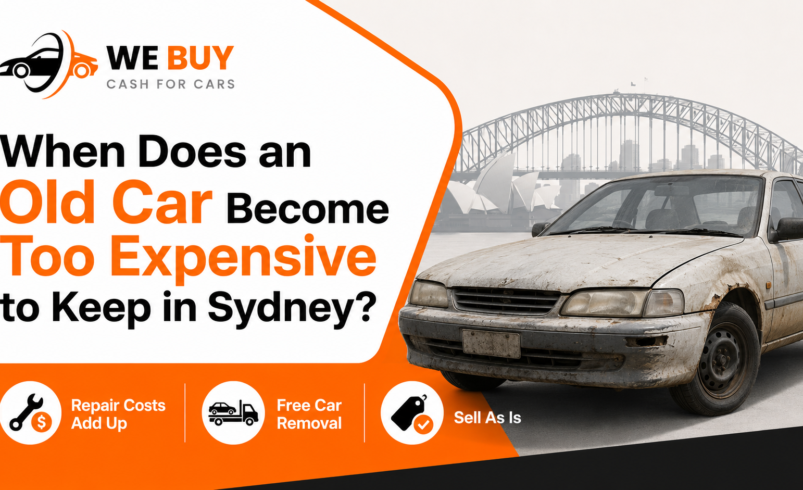

An old car becomes too expensive to keep when the money you are regularly putting into repairs, registration, servicing and maintenance starts to outweigh the value or usefulness you get from the vehicle. One repair bill might be manageable, but repeated breakdowns and rising running costs can make keeping an ageing car difficult to justify.
For Sydney drivers, the decision is not always as simple as waiting until a car stops running. Sometimes the smarter time to sell is before another expensive repair arrives.
Here are some practical signs that your old car may be costing more than it is worth keeping.
1. Repairs Are Becoming a Regular Expense
Every car needs maintenance. There is a difference, however, between routine servicing and constantly fixing something new.
Maybe you replaced the battery a few months ago, then needed brake work, and now there is a warning light on the dashboard. Individually, each repair may seem reasonable. Added together over a year, they can become a significant expense.
It may be time to reconsider keeping the vehicle if:
- you are visiting the mechanic several times a year
- new faults appear shortly after previous repairs
- major mechanical components are starting to fail
- you are delaying repairs because of the cost
- the car has become unreliable for everyday travel
Before approving another large repair, compare the estimated cost with the vehicle’s current value.
If the repair represents a large proportion of what the vehicle itself is worth, selling the car in its existing condition may deserve serious consideration.
Owners who reach this point can also explore options for selling an old car in Sydney rather than continuing to pay for repairs.
2. One Major Repair Could Cost More Than the Car Is Worth
Older cars can keep running reliably for many years, but eventually a major component may need attention.
An engine, transmission, cooling system or significant electrical problem can quickly change the financial picture.
Imagine owning a car that is worth only a few thousand dollars in its current condition. If you are facing a repair bill that represents a substantial percentage of that value, you need to consider more than whether the car can be repaired.
The better question is:
Does spending this money make financial sense for this particular vehicle?
There is no universal percentage at which you must sell. Consider the car’s overall condition, likely future repairs and how long you expect to keep driving it.
Putting a large amount of money into one repair makes less sense if several other expensive components are also approaching the end of their useful life.
3. Registration and Insurance Feel Harder to Justify
A car does not have to be driven every day to cost you money.
Keeping a registered vehicle on the road involves ongoing expenses, even if it spends most of its time sitting in the driveway.
If you have a second car that is barely being used, ask yourself whether you are genuinely getting enough value from keeping it registered and maintained.
This commonly happens when:
- you have upgraded to a newer vehicle
- your household no longer needs two cars
- you work from home more often
- the old car is only driven occasionally
- the vehicle has been parked while waiting for repairs
If you decide you no longer need the vehicle, NSW has specific requirements when a car is sold.
The NSW Government guidance for selling a used car explains the seller’s responsibilities, including lodging a Notice of Disposal after the sale.
4. The Car Is Spending More Time at Home Than on the Road
An old vehicle can quietly become an expensive piece of driveway storage.
You might keep telling yourself that you will use it again once you replace the battery, organise registration or fix a mechanical problem. Months pass and the vehicle remains exactly where it was.
This is especially common with:
- second family cars
- older work vehicles
- inherited vehicles
- cars waiting for restoration
- unregistered cars
- vehicles with mechanical problems
If you have not driven the car for a long time and do not have a realistic plan to get it back on the road, keeping it may no longer make practical sense.
A vehicle that is no longer wanted can be assessed in its existing condition. You do not necessarily need to make it roadworthy simply because you want to sell it.
For vehicles that have become unnecessary rather than completely unusable, an unwanted car buyer may provide another way to move the vehicle on.
5. You No Longer Trust the Car for Everyday Driving
Financial cost is not the only consideration.
Reliability matters as well.
If you find yourself wondering whether the car will start in the morning, make it through a long trip or leave you waiting for roadside assistance, the vehicle may already be affecting your daily routine.
Common warning signs include:
- frequent overheating
- difficulty starting
- recurring dashboard warning lights
- unexplained fluid leaks
- repeated electrical issues
- unusual engine or transmission noises
- intermittent mechanical problems
A repair might fix the immediate issue, but repeated faults can make an ageing vehicle difficult to depend on.
For someone commuting across Sydney, taking children to school or travelling for work, reliability may be worth more than squeezing another year out of a car that is constantly causing problems.
6. Your Mechanic Keeps Finding More Problems
Sometimes the clearest indication comes during a routine service.
You book the vehicle in expecting an oil change and come away with a list of items that will need attention over the next few months.
Perhaps the brakes need work now, the tyres will need replacing shortly and there is also a developing suspension problem.
None of those issues alone necessarily means the vehicle should be sold. Together, however, they give you a better picture of what ownership may cost over the coming year.
Ask your mechanic which repairs are urgent, which can wait and what else is likely to require attention.
Then calculate the likely total rather than judging each repair separately.
That can make the decision much clearer.
7. You Are Repairing the Car Mainly Because You Have Already Spent Money on It
This is an easy trap to fall into.
You spend $1,000 fixing one problem, so when another problem appears, you feel you have to repair that too because you have already invested money in the car.
But the money already spent should not be the main reason to spend more.
Instead, look at the vehicle as it stands today.
Ask:
- What is the car currently worth?
- What repairs does it need now?
- What other costs are likely in the next 12 months?
- How reliable is it?
- How much longer do I realistically want to keep it?
Past repair bills are already paid. The important question is whether the next expense is worthwhile.
8. The Cost of Keeping It Is Delaying Your Next Car
Sometimes people continue repairing an old vehicle because replacing it feels more expensive.
That can make sense when the existing car remains dependable.
But regularly spending money on an unreliable vehicle can also delay the move to something more suitable.
Instead of looking only at the cost of buying another car, compare your total likely expenses.
Consider:
- upcoming repairs
- servicing
- tyres
- registration
- insurance
- fuel consumption
- roadside assistance
- time lost dealing with breakdowns
You may discover that your current vehicle is not as cheap to keep as it first appears.
What If the Car Is No Longer Worth Repairing?
A vehicle does not have to be repaired before it can be sold.
Old cars can still have value based on factors such as their make, model, age, condition, parts and recyclable materials.
This can be particularly relevant when a vehicle has:
- major mechanical failure
- extensive accident damage
- severe body damage
- high kilometres
- multiple expensive faults
- little resale demand as a running vehicle
If the car has reached the stage where repairing it makes little economic sense, you can investigate scrap car selling options instead of putting more money into it.
What About a Car That Cannot Be Driven?
A non-running vehicle creates another cost that owners sometimes overlook: transport.
If the vehicle cannot legally or safely be driven, you may need to arrange towing to a mechanic, buyer or other location.
Before paying for transport yourself, check whether the buyer includes collection.
We Buy Cars For Cash provides car removal in Sydney for eligible vehicles, which can be useful when an old car can no longer be driven.
Let the removal provider know if the vehicle is located somewhere difficult to access, such as:
- an underground car park
- a narrow driveway
- a garage
- behind another vehicle
- a property with restricted access
Providing those details early can make collection easier to organise.
What Paperwork Is Needed When You Sell an Old Car in NSW?
Do not overlook the paperwork just because the vehicle is old, damaged or no longer running.
According to the NSW Government’s used vehicle selling guidance, a seller needs to lodge a Notice of Disposal within 14 days after selling a vehicle.
A Notice of Disposal helps notify Transport for NSW that you are no longer responsible for the vehicle.
You can find the official process through Service NSW’s Notice of Disposal information.
If you are considering cancelling registration rather than transferring it, Service NSW also provides information about cancelling vehicle registration in NSW.
Check the current NSW requirements that apply to your situation rather than relying on old paperwork or advice from previous vehicle sales.
Keep It, Repair It or Sell It?
There is no rule saying a car becomes too old at 10, 15 or 20 years.
A well-maintained older car may still be reliable and economical to own. A much newer car with major mechanical problems could be considerably more expensive.
Age is only one part of the decision.
Think about the vehicle’s:
- current market value
- repair history
- upcoming maintenance
- reliability
- registration and insurance costs
- amount of use
- overall condition
- expected future repair costs
If you use the vehicle regularly, trust it and the maintenance costs remain reasonable, keeping it may still make sense.
If it spends more time at the mechanic or sitting unused than actually helping you get around Sydney, selling may be the more practical option.
Ready to Move On From an Expensive Old Car?
An old vehicle does not need to reach complete mechanical failure before you decide to sell it.
When repairs become frequent, reliability starts slipping and every service seems to uncover another problem, it is worth comparing the cost of another year of ownership with what the vehicle is actually providing you.
We Buy Cars For Cash purchases old, unwanted and scrap vehicles in different conditions across Sydney. You can request an assessment for your vehicle before spending more money on another major repair.
Sometimes the most economical repair is the one you decide not to make.