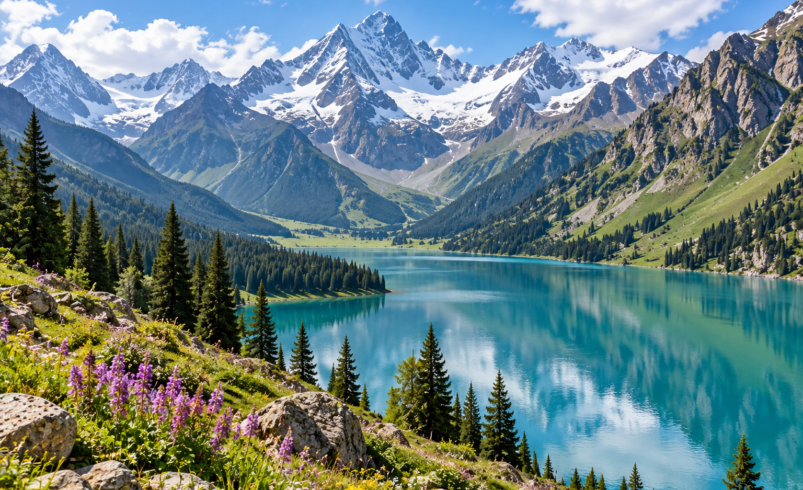

For those interested in history, mountain scenery, and culture, Kyrgyzstan is a fascinating place to visit, where you can explore the country’s ancient trade routes and its rich cultural heritage. This is a beautiful country in Central Asia that was an important part of the Silk Road network of ancient trading routes linking China, Central Asia and the Middle East. One of the most interesting historical sites of the city is the caravanserais, the traditional road-side inns where merchants and travellers could stop in the city on their long journeys and rest with their animals. These buildings provide a glimpse into the commercial life, architectural styles and cultural interactions which defined the area over many years. Visitors booking Kyrgyzstan Tour Packages from Dubai will find these incredible historic sites in combination with spectacular valleys, alpine lakes and the hospitality of the Kyrgyz people.
The caravanserais of Kyrgyzstan tell the story of the impact of trade on the daily life of the mountain and valley inhabitants of Central Asia. These were constructed close to roads and mountain passes, and offered shelter, storage and a place for traders from various areas to come together to trade and share ideas. While the majority of caravanserais are now represented only as archaeological sites, some have been remarkably well preserved, and allow a visitor to envision the difficulties involved in using the ancient trade caravan routes. These locations are a proper mix of history, archaeology, and adventure, making Kyrgyzstan an interesting destination for those readers who aren’t interested in the typical tourist experiences.
The importance of caravanserais in Kyrgyzstan needs to be understood.
Along the Silk Road, it was vital to have caravanserais for the transportation of silk, spices, textiles, precious metals, and other goods. It was a hard road for merchants, who had to cross the mountains, often in bad weather, with little food and other supplies, and some of them were even attacked by wolves. Caravanserais were safe resting areas, safe havens for merchandise, places to feed the animals and to exchange information on routes and trading opportunities.
These places in Kyrgyzstan grew up along key trading routes that passed through the Tien Shan mountain range. Their sites had functional meanings related to long-distance transportation, such as access to water, adequate resting sites, and inter-segmental links. In addition to their purpose of providing lodging for commerce, caravanserais provided opportunities for people with diverse languages, customs, religions, and arts to interact with each other. These are historical remains of not only the development of trade but also of the cultural links which played an important part in forming Central Asia.
Tash Rabat Caravanserai is the most well-known and historic caravan road in Kyrgyzstan.
Tash Rabat, a stone building located in the At-Bashy mountain region of Naryn Province, is one of the most interesting places for history buffs. This old building is located at an altitude of 1,600 meters with stunning mountain scenery, and offers a unique opportunity to explore Kyrgyzstan’s Silk Road history. It is characterized by its thick stone walls, small rooms and large central spaces, which make it stand out from other historic structures in the country.
Tash Rabat is a traditional caravan route to the Tien Shan Mountains. Being close to the routes between Central Asia and further East, it reflects the problems encountered by merchants traversing distant mountain terrain. Visitors to the site can admire the unique stone architecture, enjoy the scenic countryside and gain an understanding of the significance of mountain shelters in supporting long-distance travel.
The building has been occasionally described as a caravanserai, but there is some discussion among scholars on the aspects of its original use and evolution. It’s exact history is unclear and the site is a mix of tradition and archaeological evidence. Still, Tash Rabat is one of the most interesting locations to learn about the connection between Kyrgyzstan’s topography and ancient trade routes.
The surrounding landscape is also very attractive. In appropriate seasons visitors may be able to see open grassland, rugged peaks, and traditional grazing areas. Local stakeholders can offer further historical background and insights about how area residents lived in the harsh mountain environment.
Burana Tower and the Old City of Balasagun.
Near the village of Tokmok in northern Kyrgyzstan, there is an important place to explore the history of Silk Road Burana Tower. The tower is linked with the medieval city of Balasagun, an important political, cultural and commercial centre in the region. Burana Tower is not a caravanserai in itself, but it can help to understand the settlements and trading networks around cars.
Balasagun’s prosperity was evident during the medieval era, especially under the Karakhanid rule. The historical significance illustrates that towns along the trade routes of Central Asia were hubs of commerce, craftsmanship, administration, and religious activity. Visitors are able to climb the tower, visit archaeological sites nearby and see stone sculptures referred to as balbals.
By visiting Burana Tower, it is easy to understand why caravanserais were needed along the Silk Road system as a whole. In addition to overnight shelters, merchants relied on towns that offered them the opportunity to buy supplies, settle business and reach regional markets. The combination of Burana Tower and other historical places gives a wider picture of the medieval history of Kyrgyzstan.
Uzgen: Medieval Trade heritage.
To the South in Kyrgyzstan is the area of Uzgen, another worthwhile place for visitors who are interested in the historical links of the region. The town has significant architectural monuments related to Karakhanids period: mausoleums and a minaret. These buildings are the art and cultural products of communities that grew around significant trade routes.
The monuments of Uzgen are not caravanserais, but they provide a glimpse of the urban and cultural landscape within which the trade of the Silk Road functioned. Trade routes running through the southern part of Kyrgyzstan might have linked settlements that engaged in regional trade for agricultural produce, crafts, and other goods. The exchange of artistic techniques and ideas and cultural forms was also manifested in the religious institutions and monumental architecture.
The trip to Uzgen can be supplemented by the tour of caravanserais, in which the importance of trade in the development of towns and cultural centres will be illustrated. The region offers travellers an opportunity to enjoy its architecture and understand the historical relationships between the many societies that have inhabited the area.
Around Osh: Exploring the Silk Road
Osh is one of the oldest cities of Kyrgyzstan, and has long been a significant location in regional trade. It grew up in the Fergana Valley, where traders, farmers, craftsmen and travellers passed through between various regions of Central Asia. It has historical markets and cultural sites that provide informative glimpses into the economic landscape that supported long-distance exchange.
While no visitor should expect that all buildings in Osh were caravanserais, the city offers a good starting point to understand the broader context of the Silk Road. Its bazaars allow it to maintain the vibe of the old style trading as items such as goods, food, textiles and handicrafts are a testament to the region’s various cultural influences. Visitors can also visit local museums and chat with informative guides to find out more about the city’s history.
Osh is also particularly useful in combination with the destinations of Uzgen. These sites convey the idea that urban markets, agricultural communities and mountain routes were interconnected elements of historical trade networks. The combination of this wider view gives more information than a visit to just the individual monuments.
Kyrgyzstan’s Historic Caravanserais – along the Silk Road
Visiters interested in the Historic Caravanserais Along the Silk Road should make a route including preserved buildings and medieval towns, archaeological sites and traditional markets. The experience of Tash Rabat is the most apparent of a historic mountain caravanserai, with the settlements that sustained the regional trade offering complementary perspectives through Burana Tower, Uzgen and Osh.
These attractions may be scattered throughout the country and travel times should be taken into account. Road access to remote areas may be compromised due to weather and mountain roads may be slow. It is possible to make the trip more comfortable and enjoyable by hiring an experienced tour guide or arranging a private vehicle, which will also help the traveller to understand more about the history of each location.
One of the things to keep in mind when visiting historical sites is that there are different types of evidence at each location. In some areas, architectural remains remain visible and in other areas, this can be understood through archaeological discovery, local lore and historical investigations. Responsible tourism means respecting protected monuments, not harming old structures, and taking the advice of the locals when travelling to remote heritage sites.
Best Time to Visit Kyrgyzstan’s Historical Sites
The best time to visit Kyrgyzstan’s historic sites is during late spring, summer, and early fall. In May to September, the majestic high ranges of the valleys turn green while the weather is also better for excursions to the mountains like Tash Rabat. The summer season is especially attractive for those who enjoy cultural tourism, hiking, photography, and outdoor pursuits.
But temperature, wind and precipitation can change rapidly at high altitude. Roads may be hard to travel on in bad weather on remote roads, so take advantage of observing local weather conditions before you depart. Certain mountain areas can be less reliable for spring and fall sighting, but overall, these seasons are quieter.
Excursion clothing includes comfortable walking shoes, multiple layers of clothing, sun protection and water. Visitors may find it easier to visit smaller villages if they take some local currency with them, and have transportation planned beforehand.
Conclusion
This is a unique chance to explore the history of caravan travel on the Silk Road in Kyrgyzstan, at its mountain caravanserais, medieval monuments and historic trading towns. The mountain halt of Tash Rabat is an interesting case in point; the commercial culture and environment of the mountain resting places is also evident in Burana Tower, Узgen and Osh. These are all places that illustrate the impact of geography, architecture, and human cooperation on Central Asia’s development. These sites can reveal some of the secrets of the area’s history, and provide an opportunity to experience the dramatic natural wonders of the area while learning along the way.
Kyrgyzstan Tour Packages can offer a structured experience for travelers interested in visiting the country’s historical sites, traditional markets, mountainous areas, and local communities, which will provide them with a unique cultural holiday. When planning a trip, visitors can make sure they have a good time while also discovering the history of the region and experiencing the culture. With careful planning of travel dates, consideration for heritage sites, and adequate time buffers between stops, you can explore the incredible heritage of Kyrgyzstan’s Silk Road links and experience the stories embedded in the historic places.