


Technology is changing fast. Businesses that once relied on traditional systems are now moving toward cloud platforms, automation, artificial intelligence, data analytics, and connected digital experiences. But adopting new tools is only one part of the journey. The real challenge is using technology in a way that improves business performance.
This is where technology transformation services become valuable. They help organizations modernize outdated systems, improve workflows, strengthen customer interactions, and build a more flexible technology environment. Whether you run a growing startup or an established enterprise, choosing the right transformation partner can make the process much easier.
What Are Technology Transformation Services?
Technology transformation services focus on improving the way a business uses technology. Instead of simply installing new software, transformation involves reviewing existing systems and identifying where technology can create better results.
A transformation partner may help with cloud migration, application modernization, cybersecurity, automation, artificial intelligence, DevOps, data platforms, and digital strategy. The goal is simple. Make technology work better for the business and its customers.
For example, a company may have a slow manual process for handling customer requests. A transformation agency could introduce automation, integrate customer data, and create a smoother digital workflow. Small changes can sometimes create a big difference.
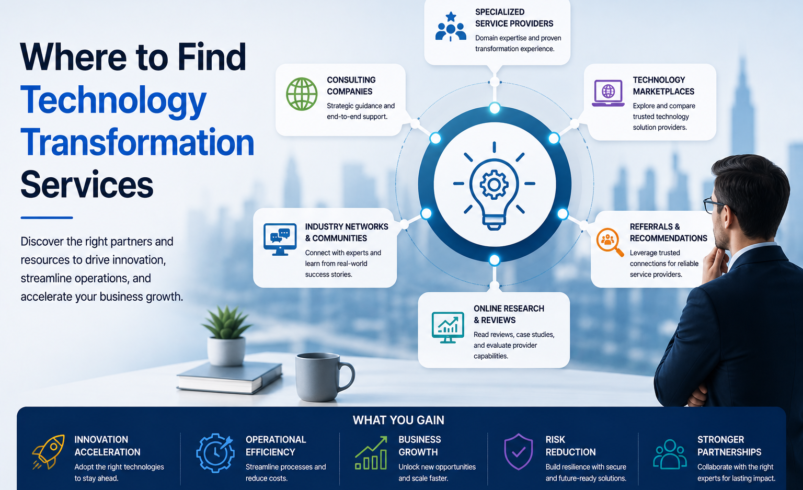
Where Can Businesses Find the Right Technology Partner?
Finding a suitable provider requires more than searching for a company that offers modern technology. Businesses should look for practical experience, industry knowledge, technical expertise, and a clear understanding of business objectives.
Technology providers can be found through specialized digital transformation agencies, IT consulting firms, software development companies, and cloud service providers. Local technology companies can also be useful because they may understand regional business requirements and market conditions.
For Pakistani businesses, searching for providers offering services such as DevOps services in Lahore, cloud consulting, cybersecurity, software development, and enterprise IT solutions can help narrow the options. A provider with multiple technical capabilities may also reduce the need to coordinate with several different vendors.
Why Customer Experience Matters in Digital Transformation
Technology should not exist just because it is trendy. It needs to solve a real problem.
This becomes especially important when discussing customer experience digital transformation. Customers expect websites, applications, support channels, and online services to be fast, convenient, secure, and easy to use.
Imagine a customer trying to purchase a product through a website. The page loads slowly. The checkout process is confusing. Customer support takes hours to respond. No matter how advanced the company’s backend technology is, the customer will probably leave.
Good transformation connects internal technology with customer expectations. Better data integration, personalized services, automation, mobile applications, and responsive support can all contribute to a stronger experience.
Digital Transformation and Customer Experience Go Together
There is a close relationship between digital transformation and customer experience. Businesses collect large amounts of customer data, but that data only becomes useful when it supports better decisions and interactions.
A modern transformation strategy can connect CRM platforms, websites, mobile applications, analytics tools, and customer support systems. This gives teams a more complete view of customer behavior.
The result can be faster responses and more relevant services. And honestly, customers notice these small improvements.
For example, an online retailer can use analytics to understand what customers search for, where they leave the purchasing journey, and which products attract the most attention. The business can then improve its website and marketing strategy based on actual behavior instead of assumptions.
What Should You Look for in a Transformation Service Provider?
The right provider should begin with your business problem, not a list of technologies.
Experience matters. Ask whether the company has worked on projects similar to yours. Look at case studies, technical capabilities, client results, and the technologies its teams actually use.
Security is another major consideration. Cloud migration, APIs, automation, and connected systems can introduce new risks if they are poorly implemented. A reliable partner should consider cybersecurity and data protection from the beginning.
Scalability is important too. Your technology needs to support future growth, not just solve today’s problem. A good transformation roadmap should leave room for new users, products, markets, and applications.
Communication should not be ignored. Technical projects can become complicated very quickly. A provider that explains things clearly and keeps stakeholders informed is often easier to work with.
Common Areas Covered by Technology Transformation
Most transformation projects are not limited to one service. They can involve several areas depending on business requirements.
Cloud transformation can help organizations move workloads away from outdated infrastructure. Application modernization can improve legacy software without necessarily replacing everything at once. Automation can reduce repetitive manual tasks.
Data and analytics can help organizations turn business information into useful insights. AI solutions can support customer service, forecasting, content workflows, and operational processes.
Cybersecurity also plays a central role. As more systems become connected, businesses need stronger identity management, monitoring, threat protection, and security policies.
DevOps practices can further improve collaboration between development and operations teams, allowing companies to release software faster while maintaining quality.
How to Choose the Best Transformation Approach
Start by identifying the actual business challenge. Is the problem slow operations, outdated software, poor customer service, rising infrastructure costs, or difficulty scaling?
Then assess the current technology environment. You do not always need to replace everything. Sometimes modernization, integration, or automation is enough.
After that, create a realistic roadmap. Transformation works better when projects are prioritized according to business value rather than trying to change everything simultaneously.
Finally, measure the results. Look at productivity, customer satisfaction, system performance, operational costs, conversion rates, and other relevant metrics. Transformation should produce measurable improvement.
Conclusion
Finding the right cloud data services pakistan provider can help businesses move from outdated processes toward smarter, more scalable operations. The best partner combines technical knowledge with business understanding and keeps customer needs at the center of the strategy.
From cloud modernization and automation to cybersecurity, DevOps, analytics, and customer experience digital transformation, the right approach can create lasting improvements. Businesses looking for a technology partner can evaluate experienced providers such as Chromeis based on their technical capabilities, industry understanding, and ability to build solutions around real business goals.
FAQs
1. What are technology transformation services?
They are professional services that help businesses modernize technology, improve processes, adopt cloud and automation solutions, strengthen security, and create better digital experiences.
2. How does digital transformation improve customer experience?
It can connect customer data, automate support, improve website and application performance, personalize interactions, and make digital services easier to use.
3. How do I choose a technology transformation company?
Review its technical expertise, previous projects, industry experience, security practices, communication process, scalability, and ability to understand your specific business requirements.
4. Can small businesses benefit from digital transformation?
Yes. Small businesses can use cloud services, automation, analytics, AI, and modern software to reduce manual work, improve efficiency, and compete more effectively.
5. Is technology transformation a one-time project?
Not always. Transformation is often an ongoing process. Businesses need to continuously improve systems as customer expectations, technologies, security requirements, and market conditions change.