
Geomembrane is an engineered synthetic membrane used to provide a low-permeability barrier in suitable waterproofing, lining, and containment applications. It is widely considered for infrastructure and environmental projects where controlling the movement of water or other liquids is important. Applications may include tunnel waterproofing, reservoir lining, canal lining, pond liners, and selected civil engineering structures.
Choosing the right geomembrane requires an understanding of the project’s purpose, environmental conditions, required material properties, and installation method. Different applications may require different membrane materials and thicknesses, so technical specifications should guide product selection.
D L Millar and Company Limited, operating under the Dr. Millars brand, supplies PVC geomembrane solutions for suitable infrastructure and waterproofing applications. By reviewing product documentation and project requirements before procurement, buyers can make more informed decisions about the membrane system best suited to their needs.
What Is a Geomembrane?
A geomembrane is a synthetic sheet designed to restrict the movement of water and certain liquids through a surface. It acts as a barrier within an engineered system and may be used in construction, water management, and environmental protection projects.
Geomembranes are manufactured from different polymer materials, including polyvinyl chloride (PVC) and high-density polyethylene (HDPE). Each material has different characteristics, making it important to choose according to the intended application rather than assuming that all geomembranes perform identically.
PVC geomembrane sheets are flexible membranes that may be appropriate for selected waterproofing and lining applications. HDPE geomembranes are also used in various containment projects. The correct choice depends on the engineering design, chemical compatibility, environmental exposure, substrate, and expected service conditions.
Key Benefits of Geomembrane Systems
Low-Permeability Barrier
Geomembranes are designed to limit the movement of water or other liquids through designated surfaces. In suitable installations, they can help reduce seepage and support water containment objectives.
Flexibility for Suitable Applications
Some geomembranes, including PVC products, offer flexibility that can help them follow designed surfaces and accommodate construction details. The required flexibility should be verified against the product’s technical specification and intended use.
Support for Water Conservation
Geomembrane lining systems may help reduce water loss through seepage in suitable reservoirs, ponds, and canals. Their performance depends on correct material selection, substrate preparation, installation quality, and the design of the complete lining system.
Integration with Other Construction Materials
A geomembrane may be combined with geotextiles, drainage layers, protective materials, anchoring systems, and other construction components. These elements must be compatible and designed to work together.
Application-Specific Protection
Geomembranes can form part of systems intended to protect selected structures and surfaces from unwanted moisture or liquid migration. The product must be suitable for the relevant exposure conditions, and installation must follow the approved project requirements.
Major Applications of Geomembrane
Tunnel Waterproofing
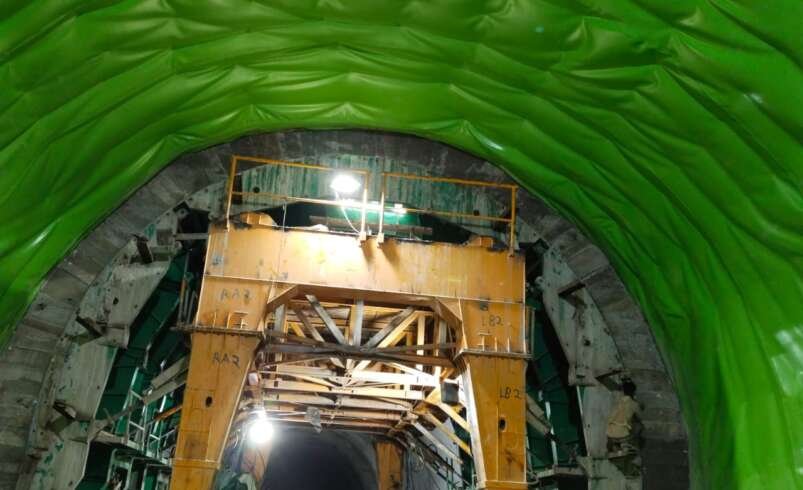
Tunnels may be exposed to groundwater and moisture entering through surrounding rock, soil, joints, and construction interfaces. A suitable geomembrane can form part of a tunnel waterproofing system intended to control water ingress and protect the structure.
The system should account for drainage, membrane joints, penetrations, transitions, and connections to adjoining structural elements. Correct installation and seam inspection are essential to achieving the intended performance.
Geomembrane for Dams and Reservoirs
Selected dams and reservoirs may incorporate geomembranes into engineered lining or seepage-control systems. The membrane may help limit water movement through designated surfaces when the design and site conditions permit its use.
The complete system may require foundation preparation, anchoring, drainage, and protective layers. A geomembrane does not replace the need for proper dam engineering or other required seepage-control measures.
Geomembrane for Canal Lining
Canal lining projects may use geomembranes to help reduce seepage through prepared canal beds and sides. Material selection should consider the soil conditions, water characteristics, installation method, and required protective layers.
Surface preparation and seam integrity are important because damage during installation can affect the performance of the lining system.
Geomembrane Pond Liners
Pond liners are used in suitable water storage applications to help reduce seepage. Geomembranes may be considered for irrigation ponds, water storage facilities, and other suitable projects where the selected material meets the design requirements.
The specification should account for pond dimensions, ground conditions, stored liquid, weather exposure, and expected mechanical stresses. Geotextile protection and anchoring may also be required.
Landfill and Environmental Containment
Geomembranes may be incorporated into engineered landfill and environmental containment systems to help restrict liquid migration. Such projects require careful consideration of chemical compatibility, environmental conditions, regulatory requirements, and the overall system design.
Additional components, such as drainage layers and geotextiles, may be necessary. Qualified professionals should determine the appropriate membrane and system configuration.
Building and Roof Waterproofing
Waterproofing requirements vary across roofs, basements, foundations, and underground structures. Certain membrane products can be suitable for these applications when their technical specifications match the construction requirements.
Before using a geomembrane in a building project, verify that it is intended for the particular application and follow the relevant installation instructions.
Road and Infrastructure Projects
Road infrastructure may include underpasses, tunnels, retaining structures, embankments, and drainage facilities where moisture control or waterproofing is required. A geomembrane may be considered for specific parts of these systems when supported by the engineering design.
The membrane should not be treated as a replacement for drainage, foundation engineering, or structural protection. Its role must be clearly defined in the project specification.
PVC Geomembrane Sheet: Important Selection Factors
PVC geomembrane sheets are flexible synthetic membranes used in selected waterproofing and lining applications. Their suitability depends on the product formulation, thickness, physical properties, installation conditions, and expected exposure.
Dr. Millars published product information has listed PVC geomembrane options in 1.5 mm and 2.0 mm thicknesses. Buyers should confirm current availability, specifications, and application suitability directly with the company.
Thickness is only one factor in selecting a membrane. Depending on the project, engineers may also need to review tensile properties, tear resistance, puncture resistance, flexibility, seam performance, and compatibility with environmental conditions.
The design should also consider the surface beneath the membrane. Sharp objects, uneven substrates, construction debris, and concentrated loads can damage a sheet if the surface is not prepared and protected properly.
Where the project specifies an Indian Standard, certification, or other compliance requirement, request current supporting documentation and verify that it applies to the exact product being supplied.
How to Choose a Reliable Geomembrane Manufacturer
Start by identifying the intended application and preparing a clear technical specification. A tunnel waterproofing system may have different requirements from a pond liner, canal lining, or landfill containment system.
Review current product data and relevant test reports. Confirm the material type, thickness, physical properties, dimensions, recommended applications, and installation requirements. If a particular standard or certification is mandatory, verify the supporting documents before procurement.
Quality-control procedures should also be considered. Depending on the project, useful documentation may include batch identification, material inspection records, seam testing procedures, and installation guidance.
Evaluate installation requirements alongside the material itself. Substrate preparation, joining methods, anchoring, protective layers, and inspection all affect the performance of the finished system.
Finally, compare suppliers on equivalent specifications. Consider technical suitability, documentation, product availability, delivery, installation support, and warranty terms where offered. The lowest price alone does not establish whether a geomembrane is appropriate for a project.
Why Consider Dr. Millars for Geomembrane Solutions?
D L Millar and Company Limited, operating under the Dr. Millars brand, has a company history dating back to 1929. Its published product information includes PVC geomembrane solutions for suitable infrastructure and waterproofing applications.
Customers can contact the company to discuss project requirements, intended applications, available thicknesses, and relevant technical documentation. Current product availability and any installation services should be confirmed directly before an order is finalized.
For infrastructure projects, the selected geomembrane should meet the approved engineering specification and the site’s actual conditions. Reviewing product data and confirming technical suitability before procurement helps ensure that the material is appropriate for its intended purpose.
Conclusion
Geomembranes are important components of suitable waterproofing, lining, and containment systems. Depending on the project design, they may be used in tunnels, reservoirs, canals, ponds, selected road structures, and environmental containment applications.
The right geomembrane depends on material properties, thickness, environmental exposure, substrate conditions, installation methods, and project requirements. Proper detailing, protection, seam inspection, and quality control are essential to the performance of the complete system.
D L Millar and Company Limited, through Dr. Millars, supplies PVC geomembrane solutions for suitable infrastructure and waterproofing projects. Contact the company to discuss your application and confirm current product specifications.
Frequently Asked Questions
1. What is a geomembrane used for?
A geomembrane is used as a low-permeability barrier in suitable waterproofing, lining, and containment systems, including selected tunnels, reservoirs, canals, ponds, and environmental projects.
2. What types of geomembrane are available?
PVC and HDPE are two common geomembrane materials. The appropriate type depends on the intended application, exposure conditions, required physical properties, and engineering specification.
3. Which PVC geomembrane thicknesses does Dr. Millars list?
Published Dr. Millars product information has listed PVC geomembrane options in 1.5 mm and 2.0 mm thicknesses. Contact the company to confirm current availability and suitability.
4. Can geomembranes be used for tunnel waterproofing?
Yes, a suitable geomembrane can form part of a tunnel waterproofing system when it meets the project specification and is installed using approved procedures.
5. How do I select the right geomembrane?
Consider the application, material type, thickness, site conditions, chemical compatibility, joining method, protection requirements, technical documentation, and any specified standards.
6. How can I contact Dr. Millars for geomembrane requirements?
Contact D L Millar and Company Limited using the details below to discuss the application, product specifications, and availability.
Company Contact Details
D L MILLAR AND COMPANY LIMITED
Flat No. 303, 3rd Floor, Elite House-36, Community Center, Zamroodpur, New Delhi-110048, India.
Phone: +91 8700518400
Email: dlmillars@gmail.com
Website: https://drmillars.co.in/