

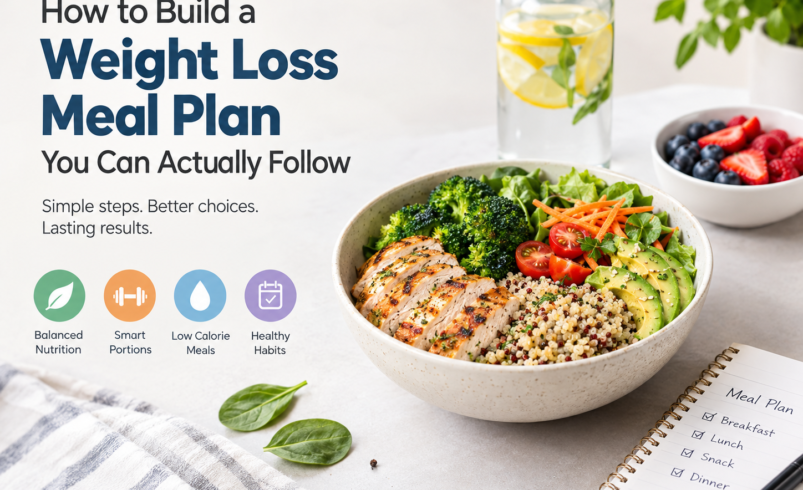

Losing weight doesn’t always require complicated diets or strict food rules. The biggest challenge is often creating a meal routine that provides enough nutrition, keeps hunger manageable, and fits into everyday life. A well-planned approach can make healthy eating easier while helping you stay consistent over time.
The best meal plan for weight loss is not necessarily the one with the fewest calories. It is a plan that creates a sensible calorie deficit while still providing protein, fiber, healthy fats, vitamins, minerals, and enough variety to make meals enjoyable.
Start With a Realistic Calorie Deficit
Weight loss generally happens when your body uses more energy than you consume over time. This is known as a calorie deficit.
However, cutting calories too aggressively can make a diet difficult to maintain. Extremely restrictive eating may leave you feeling tired, hungry, or frustrated and can make it harder to stay consistent.
Instead, focus on a moderate and sustainable approach. Your calorie needs depend on factors such as age, body size, activity level, goals, and individual circumstances.
A practical meal plan should reduce unnecessary calories without making every meal feel like a restriction.
Build Meals Around Protein
Protein is an important part of a weight management diet because it helps support muscle tissue and can contribute to feeling satisfied after eating.
Good protein sources include:
- Eggs
- Chicken
- Fish
- Greek yogurt
- Cottage cheese
- Beans and lentils
- Tofu
- Lean meat
- Seafood
Including a protein source with your main meals can make the overall eating pattern more satisfying. If you’re exercising regularly, adequate protein is also important for supporting recovery and maintaining lean muscle during weight loss.
Add More Fiber-Rich Foods
Fiber can help make meals more filling while adding nutritional value. Vegetables, fruits, whole grains, legumes, seeds, and other plant foods can all contribute to your daily fiber intake.
For example, instead of building a meal around a large serving of refined carbohydrates, you could combine a moderate portion of whole grains with vegetables and a protein source.
Simple combinations such as grilled chicken with vegetables and brown rice or lentils with a fresh salad can provide a more balanced meal.
Choose Low Calorie Meals That Still Feel Satisfying
One common mistake during weight loss is assuming that eating less automatically means eating better. A small meal that leaves you hungry an hour later may not be useful for long-term consistency.
Instead, choose low calorie meals that provide plenty of volume and nutrients. Vegetables, lean proteins, soups based on vegetables or legumes, fruit, and other minimally processed foods can help you create satisfying meals without excessive calories.
For example, a bowl containing lean protein, plenty of vegetables, a moderate serving of whole grains, and a light dressing can be more satisfying than a highly processed snack with similar or higher calories.
The goal is not simply to make portions smaller. It’s to improve the quality and structure of those portions.
Don’t Eliminate Carbohydrates
Carbohydrates are often blamed for weight gain, but they can be part of a balanced weight loss diet.
Whole grains, potatoes, oats, fruit, beans, and other carbohydrate-containing foods provide energy and nutrients. The more important consideration is the overall amount and quality of food you consume.
If you enjoy rice, bread, or oats, there’s usually no need to remove them completely. Instead, consider appropriate portions and combine them with protein and vegetables.
This approach can make your diet easier to maintain than following unnecessary food restrictions.
Plan Your Meals Before Hunger Takes Over
Meal planning can reduce impulsive food choices.
When meals are decided in advance, you’re less likely to depend on fast food, sugary snacks, or whatever happens to be available when you’re hungry. You don’t need to prepare every meal days ahead, either.
A simple weekly structure could include:
Breakfast: Eggs with whole-grain toast and fruit
Lunch: Grilled chicken, vegetables, and rice
Snack: Greek yogurt with berries
Dinner: Fish or lean protein with roasted vegetables and potatoes
These are only examples. Your meals should reflect your food preferences, schedule, nutritional needs, and lifestyle.
Pay Attention to Portion Sizes
Even nutritious foods can contribute significant calories when portions become very large. Portion awareness is therefore an important part of weight management.
You don’t have to weigh every ingredient forever. In the beginning, however, measuring common foods can help you understand how much you’re actually eating.
Using smaller serving dishes, checking food labels, and paying attention to hunger and fullness can also help develop better portion awareness.
Make Healthy Eating Convenient
A meal plan only works if you can realistically follow it.
If you have a busy schedule, complicated recipes and lengthy preparation can quickly become frustrating. Prepare simple ingredients in advance, keep nutritious snacks available, and choose meals that can be prepared efficiently.
For example, cooked chicken, chopped vegetables, boiled eggs, yogurt, fruit, and prepared whole grains can make it easier to assemble balanced meals during busy days.
Convenience matters because consistency usually matters more than perfection.
Leave Room for Flexibility
A sustainable diet doesn’t have to be perfect every day.
You may have a restaurant meal, attend a celebration, or eat something outside your normal routine. One meal doesn’t determine your overall progress.
Rather than trying to compensate by skipping meals or severely restricting food the next day, return to your normal eating pattern.
This flexible mindset can help prevent the cycle of strict dieting followed by overeating.
Track Progress Beyond the Scale
Body weight is useful, but it isn’t the only measure of progress. You can also pay attention to energy levels, workout performance, clothing fit, eating habits, and consistency.
Weight can naturally fluctuate because of water retention, food intake, sodium, digestion, and other factors. Looking at longer-term trends can provide a more useful picture than focusing on individual daily changes.
Final Thoughts
A successful weight loss diet should be practical, nutritious, and sustainable. Instead of searching for a perfect menu, focus on building meals around protein, fiber-rich foods, vegetables, sensible portions, and foods you genuinely enjoy.
The best meal plan for weight loss is ultimately one you can follow consistently without feeling that healthy eating has taken over your entire life. Start with manageable changes, make your meals convenient, and adjust your approach as you learn what works for your routine.