

Applying for a U.S. immigrant visa can feel complicated, especially when the process involves multiple government agencies, forms, supporting documents, fees, and an interview. A small mistake in a form or missing document can create delays and additional work.
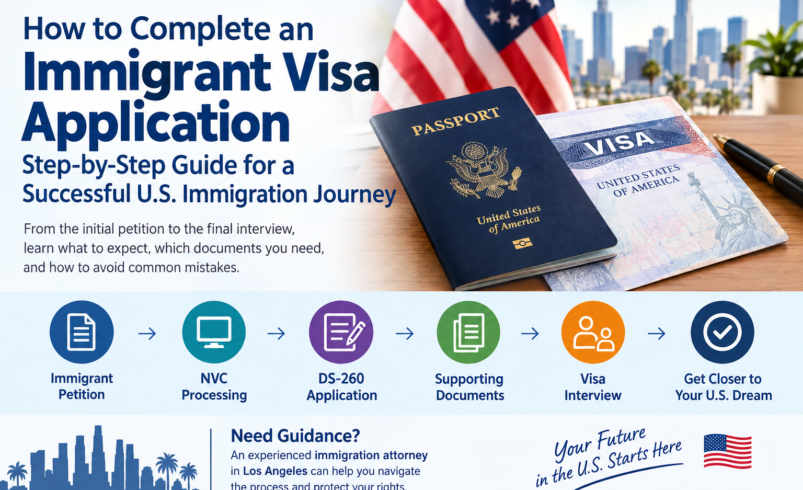
Understanding each stage before submitting your paperwork can help you prepare more carefully. The immigrant visa process generally involves an immigrant petition, National Visa Center (NVC) processing, the online DS-260 application, supporting documents, and an interview at a U.S. embassy or consulate.
Whether you are immigrating through a family relationship or an employment-based category, knowing what to expect can make the process easier to manage.
What Is an Immigrant Visa Application?
An immigrant visa application is part of the process used by eligible foreign nationals who want to obtain permanent residence in the United States through consular processing.
Unlike a temporary visa, an immigrant visa is intended for someone seeking to immigrate to the United States. Depending on the case, the immigration process may be based on a qualifying family relationship, employment, or another immigrant category.
For many family-based cases, a U.S. citizen or lawful permanent resident first files Form I-130, Petition for Alien Relative. Employment-based cases may involve Form I-140, Immigrant Petition for Alien Workers. The appropriate petition must generally be approved before the case can move to the NVC for further processing.
Step 1: Start With the Immigrant Petition
The first stage is generally the filing and approval of an immigrant petition.
For example, a qualifying U.S. citizen or lawful permanent resident may petition for an eligible relative. In an employment-based case, an employer or another authorized petitioner may file the appropriate employment petition.
USCIS reviews the petition and supporting evidence. If the petition is approved and the case requires consular processing, USCIS sends the approved petition to the Department of State’s National Visa Center.
Approval of the petition does not necessarily mean the immigrant visa is immediately available. Some visa categories have annual or country-based numerical limits, so applicants may need to monitor their priority date and the Visa Bulletin.
Step 2: Understand NVC Processing
After USCIS transfers an approved petition, the National Visa Center creates the immigrant visa case and provides instructions for the next steps.
The NVC may request visa fees, financial documentation, civil documents, and the immigrant visa application. Applicants generally use the Consular Electronic Application Center (CEAC) to manage applicable portions of the process.
It is important to read NVC instructions carefully. Missing documents or incomplete submissions can prevent the case from moving forward efficiently.
Step 3: Complete Form DS-260 Carefully
One of the most important parts of the immigrant visa process is Form DS-260, the Online Immigrant Visa and Alien Registration Application.
After the required fees are paid and the case is ready for this stage, the applicant and qualifying family members immigrating with them generally complete their own DS-260 through CEAC.
The application requires detailed personal, family, travel, employment, education, and background information. Applicants should review every answer before submitting the form.
If information has changed or an answer was entered incorrectly, it is important to understand how the error can be corrected before the visa interview. Keeping copies of submitted information can also help applicants prepare for questions at the consular interview.
After submitting the DS-260, applicants should print the confirmation page and bring it to the interview as instructed by the Department of State.
Step 4: Gather Supporting Documents
The documents required can vary depending on the immigrant visa category and the applicant’s circumstances. Common documentation may include:
- Valid passport
- Birth certificate
- Marriage certificate, when applicable
- Divorce or death certificates from previous marriages, when applicable
- Police certificates when required
- Court or criminal records when applicable
- Immigration records
- Passport-style photographs
- Financial sponsorship documents
- Certified translations when required
The NVC provides case-specific instructions regarding required documentation. Applicants should avoid assuming that another person’s document checklist will automatically apply to their case.
When submitting documents to NVC, applicants should follow the current instructions for their case. The Department of State specifically advises applicants not to send original passports or original civil documents to NVC unless instructed; photocopies are generally submitted while originals are brought to the interview.
Step 5: Prepare for the Immigrant Visa Interview
Once the required processing steps are completed and the case is ready, an immigrant visa interview is scheduled at the appropriate U.S. embassy or consulate.
The interview is an important part of the application process. A consular officer reviews the application and supporting information and determines whether the applicant qualifies for the visa under applicable immigration law.
Applicants should review their DS-260 answers, petition information, financial documents, and civil records before attending the interview. They should also follow the embassy or consulate’s specific instructions regarding medical examinations, photographs, and required documents.
Common Immigrant Visa Application Problems
Several issues can make an immigrant visa case more complicated.
Incomplete Forms
Leaving required questions unanswered or providing inconsistent information can result in additional processing or requests for clarification.
Missing Civil Documents
Birth certificates, marriage records, police certificates, and other documents may be required depending on the applicant’s circumstances. Missing documentation can delay case processing.
Inconsistent Information
Differences between the immigrant petition, DS-260, civil records, and interview answers may raise questions. Applicants should carefully review their information before submitting forms.
Financial Sponsorship Issues
Many immigrant visa cases require financial evidence from a petitioner or sponsor. The appropriate affidavit of support and supporting financial documents depend on the specific case.
Failure to Respond to NVC
Applicants should pay attention to communications from NVC and respond within applicable deadlines. The Department of State notes that failing to apply within one year after notice of visa availability can create a risk of termination of registration under INA section 203(g), subject to applicable exceptions.
When Should You Consider Legal Assistance?
Not every immigrant visa applicant needs an attorney, but professional legal assistance may be useful when the case involves complicated immigration history, prior visa refusals, criminal records, unlawful presence, previous removal proceedings, inadmissibility concerns, complicated family circumstances, or inconsistencies in immigration records.
Someone searching for an immigration attorney Los Angeles may want to look for an attorney who regularly handles immigrant visa and consular processing cases and can explain the specific issues affecting the application.
An attorney can review the immigration history, identify potential concerns, help organize supporting evidence, and explain available options. However, legal representation does not guarantee that a visa will be approved because the final decision is made through the applicable immigration and consular process.
How to Make the Process More Manageable
A careful preparation strategy can reduce avoidable problems. Keep copies of every form submitted, organize documents by category, check expiration dates, monitor NVC communications, and update relevant information when circumstances change.
Applicants should also rely on current instructions from USCIS, NVC, and the appropriate U.S. embassy or consulate because procedures and document requirements can change.
The Department of State provides current NVC processing information and updates its published timeframes regularly.
Final Thoughts
The immigrant visa application process involves several important stages, from petition approval to NVC processing, DS-260 submission, document review, medical requirements, and the consular interview. Understanding these steps can help applicants prepare their cases more effectively and avoid preventable mistakes.
Because every immigration case has its own facts, applicants should review the requirements that apply specifically to their visa category and personal circumstances. When complications arise, consulting a qualified immigration professional can provide case-specific guidance and help clarify the next steps.