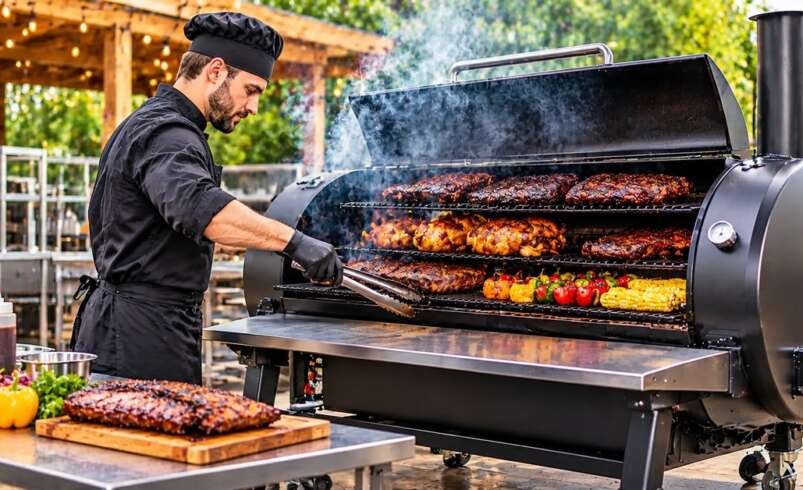

Choosing the right industrial barbecue is important for restaurants, hotels, catering businesses, and other commercial kitchens. The best choice depends on how much food you need to cook, the type of fuel you use, the space available, and your budget. You should also think about cleaning, safety, and repair costs before buying.
The right equipment can help your team prepare food more easily, serve customers on time, and keep the kitchen running smoothly. By checking a few important things before making a purchase, you can choose equipment that meets your needs and offers good value for money.
Why Choosing the Right Industrial Barbecue Matters?
The right cooking equipment can make a big difference in a busy kitchen. It helps workers prepare food more easily, keep cooking results consistent, and manage their time better. Choosing carefully can also help a business avoid extra costs and find equipment that works well for many years.
- Determine Your Cooking Capacity Requirements
First, think about how much food you need to cook each day. A small restaurant may need less cooking space than a large hotel or catering business.
Choose equipment that can handle your busiest hours, not just quiet times. If the cooking area is too small, customers may have to wait longer. If it is too large, you may waste space and energy.
Before buying, ask the seller how much food the equipment can cook at one time. This will help you understand whether it is right for your business.
- Choose the Right Fuel Type
Cooking equipment can use different types of fuel, such as gas, electricity, or charcoal. Each type has its own benefits, so your choice should depend on your kitchen and cooking needs.
- Gas: It heats up quickly and makes it easy to change the heat.
- Electricity: It can offer good temperature control when the power supply is suitable.
- Charcoal: It can give food a smoky flavour, but it needs more cleaning and careful handling.
Check which fuel is easy to get in your area and how much it costs. Also, make sure your kitchen has the right connections and ventilation to use the equipment safely.
- Check the Build Quality and Materials
Kitchen equipment is used often, so it should be strong and well made. A good industrial barbecue grill should have a sturdy frame, strong cooking grates, and parts that can handle regular use.
Stainless steel is often used because it can resist rust, depending on its grade and how it is cared for. Check the handles, controls, and other parts to make sure they feel secure.
Ask the seller about the warranty and the cost of replacement parts. This can help you avoid problems if something breaks later.
- Look at Temperature Control
Different foods need different amounts of heat. If the heat is uneven, some food may cook too quickly while other parts remain undercooked.
Choose equipment that lets workers control the temperature easily. Some models have separate cooking areas, which can help staff prepare different foods at the same time.
If possible, ask the seller to show you how the equipment works before buying it. Good temperature control can help your team prepare food more evenly, but staff must still follow safe food-handling and cooking rules.
- Measure Your Kitchen Space
Before buying, measure the area where you plan to place the equipment. Make sure there is enough room for workers to move around, prepare food, and clean the cooking area.
You should also check the following points:
- Size: Make sure the equipment fits in the available space.
- Ventilation: Check whether a suitable exhaust system is needed.
- Connections: Make sure gas or electrical connections are safe and suitable.
- Access: Leave enough room for cleaning and repairs.
- Safety rules: Follow local building and fire-safety requirements.
Planning ahead can help prevent installation problems and extra costs.
- Compare the Total Cost
The price you pay when buying equipment is only one part of its total cost. You may also need to pay for installation, fuel, electricity, cleaning products, repairs, and replacement parts.
A cheaper model may cost more over time if it breaks often or uses too much energy. Compare different models and ask about their warranty, maintenance needs, and after-sales support.
Choose equipment that fits your budget and does the job well. Spending a little more at the start may be worthwhile if the equipment is reliable and easier to maintain.
- Check Cleaning and Safety Features
Keeping cooking equipment clean is important for food safety and good cooking results. Look for removable trays and grates that are easy to clean.
Ask the seller how to clean the equipment and how often it needs servicing. Check for useful safety features, such as stable legs, heat-resistant handles, and suitable gas-safety controls where needed.
Workers should know how to use the equipment correctly and clean it after use. Regular checks can help prevent problems and keep the kitchen safe.
Closing Remarks
Buying commercial cooking equipment takes careful planning. By checking cooking capacity, fuel type, build quality, temperature control, kitchen space, total cost, and safety features, you can make a smarter choice for your business.
Before making a final decision, compare products, read the warranty details, and ask trusted suppliers for advice. The right industrial barbecue can help your kitchen work smoothly, prepare food consistently, and serve customers better. A little research before buying can save time, reduce extra costs, and help your business make a lasting investment.