

Running a modern dental practice requires more than delivering excellent clinical care. Practices must also manage staffing, insurance verification, claims, recruitment, and administrative workflows efficiently. Technology can bring these areas together, helping dental teams reduce routine workload, respond to staffing needs, and maintain smoother day-to-day operations.
The Changing Needs of Dental Practices
Dental practices operate in a fast-moving environment where patient care and administrative responsibilities must work together. A practice may have a full schedule of patients while simultaneously dealing with insurance eligibility questions, staff absences, recruitment requirements, and unpaid or denied claims.
When these responsibilities are handled through separate systems, dental teams can spend considerable time moving between platforms and manually following up on routine tasks. This can make operational management more complicated and create additional pressure for practice owners and office managers.
A more connected approach allows practices to bring important administrative functions into a single workflow. Instead of treating staffing, insurance verification, recruitment, and claims management as completely separate activities, integrated technology can help coordinate these processes.
Why Staffing Has Become a Critical Practice Priority
Staffing is one of the most important operational considerations for dental practices. Hygienists, dental assistants, and dentists are essential to maintaining appointment capacity, but unexpected absences can quickly create scheduling problems.
A vacant shift can affect patients, existing employees, and the practice’s revenue. If a hygienist or assistant is unavailable, other members of the team may have to absorb additional responsibilities. In some situations, appointments may need to be rearranged or postponed.
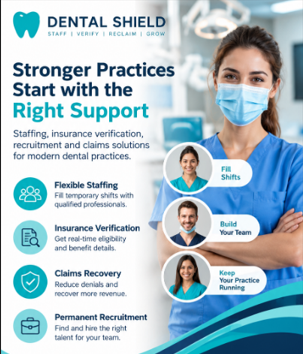
A flexible staffing solution can help practices respond to these situations more efficiently. AI-supported matching can connect practices with available professionals according to the requirements of an open shift. This approach can reduce the time spent searching for suitable temporary staff while helping practices maintain their planned schedules.
For practices that need more than temporary coverage, recruitment technology can also provide a structured way to manage permanent hiring.
Creating a More Efficient Staffing Workflow
dental shield staffing is designed around the need for dental practices to fill temporary and permanent staffing requirements through a technology-driven platform.
The staffing approach includes AI-matched temporary shifts and access to verified hygienists, assistants, and dentists. The platform also supports onboarding and credential verification, giving practices a centralized way to manage staffing-related processes.
A streamlined staffing workflow can be particularly useful when a practice needs coverage quickly. Instead of relying entirely on traditional agency communication, practices can use a digital platform to identify available professionals and manage shifts.
For dental professionals, flexible staffing can also create opportunities to find shifts that fit their availability. This can provide an alternative to traditional employment arrangements while helping practices access additional talent when needed.
Permanent Recruitment Beyond Temporary Shifts
Temporary staffing solves an immediate problem, but many dental practices also need dependable full-time employees. Recruiting permanent team members can involve writing job descriptions, reviewing applications, scheduling interviews, and managing offers.
A digital recruitment pipeline can organize these steps in one place. Dental Shield provides tools for posting jobs, reviewing applicants, and moving candidates through stages such as application, shortlisting, interviewing, offering, and hiring.
The platform also provides self-service and managed recruitment options. Practices can create their own listings or have candidates sourced and vetted through the managed option.
Another useful feature is the ability to move a successful temporary worker into a permanent role. This can allow practices to become familiar with a professional’s work before making a longer-term hiring decision.
Simplifying Insurance Verification
Insurance verification is another administrative responsibility that can consume significant staff time. Before treatment begins, dental teams may need to check eligibility, deductibles, annual maximums, waiting periods, frequency limitations, and pre-authorization requirements.
Manual verification can make this process repetitive, especially for practices handling a large number of patients.
An automated verification system can help organize these details and provide staff with important benefit information more efficiently. Dental Shield describes real-time eligibility verification through dental insurance connectivity, along with support for dual-insurance breakdowns, frequency limits, waiting periods, and pre-authorization alerts.
Having these details available earlier in the patient workflow can help administrative teams prepare for appointments and reduce avoidable surprises related to insurance benefits.
Improving Claims Recovery
Insurance claims are closely connected to practice revenue. When claims are denied, staff members may need to determine why the denial occurred, gather documentation, prepare an appeal, and follow up.
These tasks can become difficult to manage when there are many outstanding claims.
An automated claims recovery system can help organize the process. Dental Shield’s claims recovery tools include AI-based denial analysis, pattern identification, automated appeals, follow-up tracking, and an electronic document repository for audit trails.
A structured claims workflow can make it easier for practices to track what has been submitted, which claims require attention, and where additional action may be necessary.
Bringing Multiple Administrative Functions Together
One of the biggest challenges in dental practice management is fragmentation. A practice may use one system for staffing, another for insurance verification, separate recruitment tools, and additional software for claims.
Using several disconnected systems can create duplicate work and make it harder for teams to maintain consistent information.
An integrated platform can reduce this fragmentation by bringing multiple administrative functions into one environment. Dental Shield describes three connected areas covering insurance verification, staffing, and claims recovery, with permanent recruitment also incorporated into its practice management offering.
This type of centralized approach can be valuable for growing practices that need to manage more appointments, employees, and administrative activity without creating unnecessary complexity.
Supporting Dental Professionals
Practice management technology is not only relevant to practice owners. Dental professionals also need convenient ways to discover opportunities, manage shifts, and stay connected with practices.
A mobile-based workflow can make staffing more accessible for professionals who want flexible work arrangements. According to the platform’s website, its app allows professionals to manage shifts, check in and out, track earnings, and remain connected with their practice.
This creates a more connected relationship between practices and the professionals providing temporary or permanent support.
Security and Practice Integration
Dental practices handle sensitive patient and business information, making security an important consideration when introducing new technology.
Dental Shield states that its platform is HIPAA compliant and offers AES-256 encryption, TLS 1.3, and a Business Associate Agreement option. It also states that the platform works with practice management systems including Dentrix Ascend, Curve Dental, and Open Dental.
Compatibility with existing practice management software can be particularly important because practices may not want to replace systems that already support their core clinical and administrative operations.
Making Technology Practical for Dental Teams
Technology is most useful when it simplifies rather than complicates daily work. Dental teams need tools that can be introduced without requiring extensive technical resources or lengthy implementation processes.
Dental Shield states that practices can be live in under 24 hours and that no IT team is required for setup. The platform also promotes month-to-month use without a long-term contract.
These characteristics can make digital practice management more accessible to practices that want to improve administrative workflows without undertaking a major technology project.
Building a More Connected Practice
The future of dental practice management is increasingly connected. Staffing, recruitment, insurance verification, claims, and patient administration all influence how efficiently a practice operates.
A connected platform can help practices coordinate these responsibilities while giving teams more time to focus on patients and clinical priorities. Temporary staffing can address immediate workforce gaps, permanent recruitment can support long-term growth, insurance verification can organize benefit information, and claims recovery can help teams manage outstanding revenue.
The goal is not simply to add more technology to a practice. The real opportunity is to use technology to remove unnecessary administrative friction and create workflows that are easier for both practices and professionals to manage.
A Practical Approach to Modern Dental Operations
Dental practices have different staffing structures, patient volumes, and operational requirements. However, the need for reliable administrative processes is common across the industry.
By bringing important functions together, modern practice management platforms can help dental organizations approach everyday challenges in a more organized way. From filling an unexpected shift to recruiting a permanent team member or managing insurance and claims processes, centralized digital tools can support multiple areas of practice operations.
As dentistry continues to evolve, practices will increasingly look for systems that combine convenience, security, staffing flexibility, and administrative efficiency. Technology that connects these areas can provide a foundation for practices seeking to create smoother workflows while keeping patient care at the center of their operations.