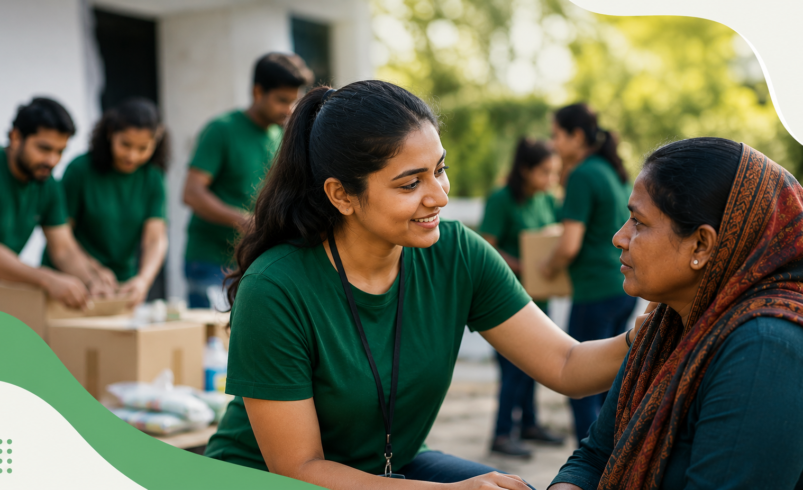

NGO workers and volunteers often work in situations where people are experiencing difficult life circumstances. They may support communities affected by poverty, displacement, illness, violence, disasters, social exclusion, family difficulties, or other forms of adversity. Their work can involve direct interaction with people who are emotionally distressed, even when mental health support is not the primary purpose of the organisation.
This creates an important question for the social sector: how prepared are NGO workers and volunteers to respond when someone shows signs of emotional distress or a mental health concern?
Professional mental health care remains essential, but it is not always immediately available. A trained volunteer or NGO worker may be one of the first people to notice that someone is struggling. Appropriate training can help them respond with greater confidence while maintaining clear boundaries around what their role involves.
Why NGO Workers Encounter Mental Health Concerns
NGOs operate across a wide range of settings. Their teams may work with children, older adults, families, people experiencing homelessness, survivors of violence, communities affected by disasters, people with disabilities, or individuals facing economic hardship.
These circumstances can involve significant psychological stress. NGO workers may hear difficult stories, witness distress, provide practical assistance during crises, or support people who have limited access to formal services.
Not every person experiencing hardship will develop a mental health condition. However, difficult circumstances can increase the likelihood that workers encounter people who need emotional or psychological support.
The Role of NGO Workers and Volunteers
NGO workers are not automatically mental health professionals. Their responsibilities depend on their role, training, and the organisation’s objectives.
A community worker may help a family access government services. A volunteer may distribute resources after an emergency. A programme coordinator may support children or older adults. A field worker may regularly interact with people experiencing severe social challenges.
Despite these different roles, they may all encounter situations where someone needs more than practical assistance.
This is where mental health awareness can become a valuable additional capability.
Why NGO Worker and Volunteer Needs Mental Health First Aid Training
NGO Worker and Volunteer Needs Mental Health First Aid Training because people working directly with communities may encounter mental health concerns without having formal clinical training.
Training can help them recognise potential warning signs, approach people respectfully, listen without judgement, encourage appropriate help seeking, and understand when a situation may require urgent professional assistance.
The purpose is not to turn NGO workers into counsellors or psychologists. Instead, training gives them a framework for responding appropriately within their existing role.
This can be particularly useful in areas where access to mental health professionals is limited.
What Mental Health First Aid Can Provide
Mental Health First Aid prepares people to respond to someone who may be experiencing a mental health problem or crisis.
A trained first aider can provide initial support while helping the person identify appropriate next steps. They can listen, communicate respectfully, encourage professional support, and connect individuals with available resources.
The approach can be valuable in community settings because people may not immediately seek professional help themselves.
However, first aid does not replace clinical assessment or treatment. When a person’s needs exceed the first aider’s role, referral becomes essential.
A Field Situation
Consider an NGO working with families experiencing financial hardship.
A field volunteer regularly visits households to provide information about available services. During one visit, the volunteer notices that a parent who previously participated actively in conversations has become withdrawn and appears overwhelmed.
The volunteer does not attempt to diagnose the person. Instead, they ask how the person has been managing and provide an opportunity to talk.
During the conversation, the person explains that ongoing financial pressure and family difficulties have become difficult to manage.
A trained volunteer can respond appropriately by listening, acknowledging the person’s concerns, explaining available support, and encouraging the person to access professional help where appropriate.
Without training, the volunteer may feel uncertain about whether to raise the issue at all.
Recognising Boundaries
Boundaries are particularly important in NGO environments because workers may develop strong relationships with the communities they support.
A volunteer may genuinely want to solve a person’s problems, but this can create unrealistic expectations.
Mental health first aid training should make it clear that volunteers are not responsible for diagnosing, treating, or managing another person’s recovery.
Their responsibility is to provide appropriate initial support and connect people with suitable services.
Clear boundaries also protect volunteers from taking on emotional responsibilities that exceed their role.
Responding to a Crisis
Some situations require urgent action.
An individual may express thoughts of suicide, appear severely confused, become highly distressed, or present an immediate safety concern. In such situations, an NGO worker should not attempt to manage the crisis alone.
The appropriate response depends on the circumstances and available local services. Emergency or professional assistance may be required.
Organisations should therefore have clear crisis procedures before sending workers into the field. Training is most effective when it is connected to practical referral and emergency pathways.
Mental Health Advocacy Through Community Work
Mental Health Advocacy involves helping improve understanding, reduce stigma, promote access to support, and encourage systems that recognise mental health as an important part of overall wellbeing.
NGOs are often well positioned to contribute because they already work closely with communities.
Advocacy can take many forms. It may involve community education, helping people understand available services, challenging harmful stereotypes, supporting rights, or encouraging institutions to improve access to care.
Mental health first aid training can complement these activities by increasing the number of people who know how to respond appropriately when concerns arise.
Reducing Stigma in Community Settings
Stigma can prevent people from talking about mental health or seeking professional support.
People may fear being judged, labelled, excluded, or misunderstood. In some communities, mental health concerns may still be explained through misconceptions rather than health based understanding.
NGO workers can contribute to reducing stigma through respectful communication.
They do not need to become mental health educators in every interaction. Simple behaviours such as avoiding judgemental language, listening respectfully, and treating mental health concerns as legitimate health issues can help create more supportive environments.
Training Should Reflect the NGO’s Work
Not every NGO needs the same training.
An organisation supporting disaster affected communities may have different requirements from an NGO working with young people, older adults, people experiencing homelessness, or communities affected by chronic illness.
Training should therefore be connected to the situations workers are most likely to encounter.
Organisations should also consider language, cultural context, geographic location, referral availability, and the experience level of participants.
A generic training approach may be less effective if it does not reflect the realities of field work.
Supporting Volunteers After Difficult Encounters
NGO workers and volunteers may themselves be affected by the situations they encounter.
Listening to stories of trauma, witnessing suffering, or working in difficult environments can be emotionally demanding.
Organisations should therefore consider the wellbeing of their own teams. Workers need appropriate supervision, opportunities to discuss difficult experiences, reasonable rest, and access to professional support when required.
Mental health first aid training should not create an expectation that volunteers must absorb other people’s distress without support.
Creating a Referral Network
Training is more useful when workers know where to refer people.
Before implementing a mental health first aid programme, NGOs can map available local services. These may include government health services, hospitals, qualified mental health professionals, community services, crisis resources, or other appropriate organisations.
Referral information should be kept current because services can change.
Workers should also understand which situations require urgent escalation rather than routine referral.
Working With Communities, Not Just For Communities
Effective mental health support should respect the knowledge and experiences of the communities being served.
NGO workers should avoid assuming that one approach will work for everyone. Cultural beliefs, language, family structures, previous experiences with healthcare, and access to resources can all influence how people understand mental health.
Listening to communities can help organisations design more appropriate support pathways.
Community participation can also make mental health programmes more acceptable and sustainable.
Training the Right People
An NGO does not necessarily need to train every employee and volunteer at the same level.
Organisations can identify people who regularly interact with communities, supervisors who support field teams, programme staff, and volunteers who are likely to encounter mental health concerns.
A wider network can then be developed over time.
The goal should be to ensure that workers know who has training, where to refer concerns, and what to do when an urgent situation arises.
Measuring the Value of Training
Organisations should consider how they will evaluate a mental health first aid programme.
Evaluation can examine participants’ knowledge, confidence, attitudes, understanding of referral pathways, and ability to identify appropriate responses.
Longer term evaluation may also explore whether workers feel better prepared to respond to concerns and whether community members are being connected with appropriate services.
The purpose of measurement should be improvement rather than claiming that training alone has solved community mental health challenges.
What Training Cannot Solve
Mental health first aid is one component of a wider support system.
It cannot replace qualified mental health professionals, accessible healthcare, social protection, safe housing, economic support, or policies that address the causes of community distress.
An NGO should therefore avoid treating training as a complete solution.
If communities lack access to professional services, organisations may need to work on referral partnerships and broader service development alongside training.
Building Sustainable Capacity
Training can become more valuable when it is integrated into the organisation’s wider systems.
New volunteers can receive basic awareness information. Selected staff can undertake more detailed training. Supervisors can understand referral and crisis procedures. Leadership can ensure that appropriate professional support is available.
This creates a structure rather than relying on a small number of individuals.
Regular refresher opportunities and updated referral information can also help maintain organisational capacity.
A Practical Model for NGOs
A practical NGO approach can begin with four questions.
First, what mental health concerns are workers most likely to encounter?
Second, which employees or volunteers are most likely to notice these concerns?
Third, what professional and community services are available for referral?
Fourth, what procedures should workers follow when a situation becomes urgent?
Answering these questions before training begins helps ensure that learning is connected to real field requirements.
Conclusion
NGO workers and volunteers frequently interact with people facing challenging circumstances, which means they may encounter mental health concerns even when mental health is not their primary area of work.
Mental health first aid training can help these workers recognise potential concerns, respond with greater confidence, maintain appropriate boundaries, and encourage access to professional support.
The training does not turn volunteers into therapists, nor does it replace professional mental healthcare. Its value lies in strengthening the first response and creating a bridge towards appropriate assistance.
NGOs can build on this by developing referral networks, supporting their own workers, reducing stigma, and contributing to mental health advocacy within the communities they serve.
When community workers are appropriately trained and supported, they can become an important part of a wider system that helps people recognise mental health concerns earlier and connect with the support they need.