

Australian buildings are exposed to a wide range of weather conditions throughout the year, from intense sunlight and heat to heavy rain, strong winds, humidity and sudden temperature changes. Over time, these conditions can place significant pressure on building façades, windows, doors, joints, cladding and other external areas. Even small gaps or failed seals can allow water and moisture to enter areas where they can cause deterioration, staining, mould growth and other building problems. Effective weatherproof sealing in Sydney is therefore an important part of maintaining the performance and durability of residential, commercial and industrial buildings.
Weatherproof sealing is not simply about filling visible gaps. It involves selecting suitable sealants, preparing surfaces correctly and creating flexible, durable seals that can accommodate normal building movement and ongoing exposure to Australian weather conditions. The National Construction Code includes requirements relating to sealing and weatherproofing of parts of the building envelope, including external openings and wall systems. For property owners, builders and facility managers, professional sealing can help protect vulnerable areas and reduce the likelihood of moisture-related deterioration.
What Is Weatherproof Sealing?
Weatherproof sealing is the process of sealing joints, gaps, penetrations and connections on the external areas of a building to reduce the entry of rainwater, moisture and air. Depending on the building design, sealing may be required around windows, doors, façade joints, cladding connections, expansion joints, penetrations and other interfaces where different building materials meet.
A weatherproof seal needs to do more than create a barrier. External building elements can expand, contract, move and vibrate due to temperature changes, wind and normal structural movement. A suitable sealant must therefore provide flexibility while maintaining adhesion to the surfaces it is designed to protect.
Weatherproof caulking is commonly used as part of this process. When correctly specified and installed, it can help close exposed joints and gaps while allowing a degree of movement. The exact sealant and installation method should always be selected according to the substrate, joint design, exposure conditions and project requirements.
Why Weather Exposure Can Damage Buildings
Australia’s varied climate can create challenging conditions for building exteriors. Different regions experience different combinations of heat, rainfall, humidity, coastal exposure, wind and ultraviolet radiation. Sydney buildings can also experience significant temperature changes and periods of heavy rainfall.
Water is one of the most important concerns when external joints are not adequately sealed. Rainwater can enter through deteriorated or poorly installed joints and travel behind façade systems or around openings. Once moisture gets into concealed areas, identifying the original entry point can become difficult.
Repeated exposure can also contribute to sealant deterioration. Ultraviolet radiation, temperature changes and movement can gradually affect some sealants. A joint that was properly sealed when a building was constructed may eventually require inspection, maintenance or replacement.
This is why building exterior sealing should be viewed as an ongoing part of building maintenance rather than a one-time task that can be ignored after installation.
Common Areas That Require Weatherproof Sealing
External sealing can be required across many parts of a building. The exact locations depend on the construction system, materials and design.
Windows and Door Frames
Windows and doors create openings in the building envelope and therefore require careful attention to sealing. Gaps around frames can become vulnerable points for water and air infiltration when seals deteriorate.
Professional exterior caulking around suitable joints can help maintain the separation between internal and external environments. Existing sealant should be inspected for cracking, shrinkage, separation or loss of adhesion before replacement work begins.
Building Façades
Façades can contain numerous joints between panels, masonry, concrete, glazing systems and other materials. These joints may experience movement throughout the life of a building.
A properly planned building exterior sealing approach can help protect these interfaces from weather exposure. It is particularly important to identify deteriorated joints before water penetration becomes a larger maintenance issue.
Cladding Joints
External cladding systems often contain multiple connections and transitions. Depending on the construction method, sealants may be used around joints, penetrations and interfaces.
The sealing method should be compatible with the cladding material and the movement expected within the joint. Poor preparation or unsuitable sealant can result in premature failure.
Expansion and Movement Joints
Buildings move. Materials can expand and contract as temperatures change, while structural movement and vibration can also affect joints. Expansion and movement joints are specifically designed to accommodate such changes.
Sealing these joints requires careful consideration of joint width, depth, movement capability, backing materials and sealant compatibility. Simply applying a thick layer of sealant over a failed joint is not necessarily an effective long-term solution.
External Penetrations
Pipes, cables, vents, fixtures and other penetrations can create openings through external building elements. These areas need appropriate detailing and sealing to minimise the risk of moisture entering the building envelope.
The Role of Weatherproof Caulking
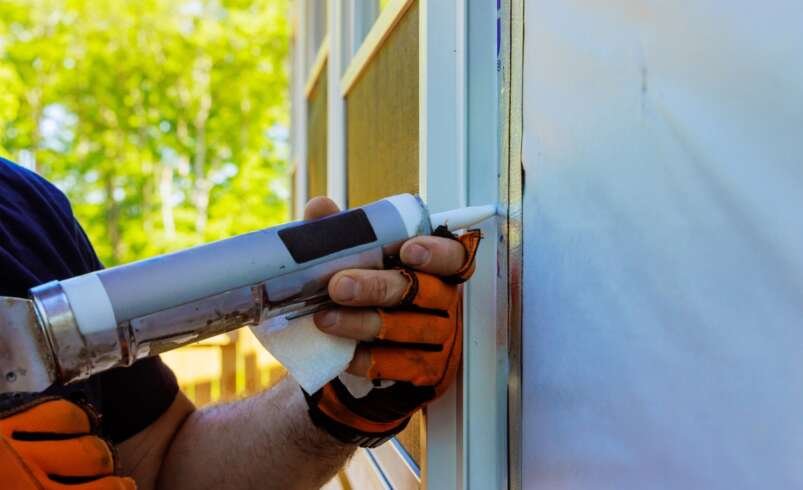
Weatherproof caulking provides a flexible sealing solution for many external joints where movement and exposure need to be considered. The objective is to create a continuous seal that remains properly bonded to the intended surfaces.
However, the quality of the finished seal depends heavily on preparation and installation. A high-quality sealant cannot compensate for contaminated surfaces, poor joint design or incorrect application.
Before applying sealant, the existing joint should be assessed. Old, failed or loose material may need to be removed. Surfaces should be appropriately prepared and allowed to be clean and suitable for adhesion. Where required, joint backing and other components should be installed according to the intended joint configuration.
The sealant is then applied in a controlled manner to achieve the required profile and contact with the joint surfaces.
Signs That External Sealing May Need Attention
Building owners and managers should regularly inspect exposed joints and seals. Several visible signs can indicate that maintenance may be required.
Cracking is one of the most obvious warning signs. A sealant bead that has split or developed surface cracks may no longer provide reliable protection.
Separation is another concern. If the sealant has pulled away from the substrate, water may be able to enter behind the joint.
Shrinkage can create gaps between the sealant and surrounding materials. Discolouration, hardening, brittleness and visible deterioration may also indicate ageing or environmental exposure.
Inside the building, water staining or dampness around windows and external walls can sometimes indicate problems with exterior sealing. However, moisture can travel through building assemblies, so the visible symptom may not always be located directly besides the actual entry point.
Why Professional External Caulking Matters
External sealing may appear straightforward, but achieving a durable result requires more than simply applying sealant to a visible gap. The condition of the existing joint, substrate compatibility, movement requirements, sealant selection and application technique all influence performance.
Professional external caulking services can provide a more systematic approach to identifying and addressing deteriorated external joints. This can be particularly important for commercial buildings, apartment buildings, high-rise properties and structures with extensive façades.
A professional assessment can help determine whether an existing seal should be repaired, removed and replaced, or whether a broader remedial solution may be necessary.
Weatherproof Sealing for Commercial Buildings
Commercial buildings often have large external surfaces and many joints that are exposed to the elements. Office buildings, retail properties, warehouses, apartment complexes and other commercial structures can have extensive façade systems requiring regular inspection.
A small sealant failure repeated across multiple areas can eventually become a significant maintenance concern. Water penetration may affect internal finishes, insulation, wall systems or other building components.
Planned weatherproof sealing Sydney services can therefore form part of a property’s preventative maintenance programme. Instead of waiting until leaks become obvious, building managers can arrange inspections of vulnerable external joints and address deterioration earlier.
This approach can also help property owners identify areas where sealant has reached the end of its useful service life.
Weatherproof Sealing for Residential Properties
Residential buildings also have numerous areas that depend on effective external sealing. Windows, doors, balconies, façade transitions, cladding, roof-related interfaces and other external junctions can all be exposed to rain and changing weather.
For homes and apartments, deteriorated external seals may result in water entering around openings or affecting external finishes. Early attention can help reduce the risk of more extensive deterioration.
External caulking Sydney services can be particularly useful when a property owner notices cracked sealant, visible gaps, water staining or deteriorated joints around external openings.
Preparing Surfaces Before Sealing
Surface preparation is one of the most important stages of external sealing. The joint must be assessed and prepared so that the new sealant can achieve suitable adhesion.
Loose sealant and failed material may need to be removed before replacement. Dust, dirt, moisture, coatings or other contaminants can interfere with adhesion, so the preparation process should be appropriate for the substrate.
The joint itself should also be assessed for movement and dimensions. In some applications, backing materials may be required to control sealant depth and help create the intended joint configuration.
Correct preparation helps ensure that the sealant performs as part of the building system rather than simply covering an existing problem.
Choosing the Right Sealant
There is no single sealant that is suitable for every external application. Sealant selection should consider the substrate, expected movement, exposure conditions, joint dimensions and compatibility with adjacent materials.
Some applications may require products with strong resistance to weathering and ultraviolet exposure, while others may require particular adhesion or movement characteristics.
The intended service conditions should always be considered before installation. Using an unsuitable product can lead to premature cracking, adhesion failure or deterioration.
Maintenance and Regular Inspection
Even a well-installed external seal will eventually require inspection. Building movement, weather exposure and ageing can affect sealant performance over time.
Regular inspections can identify early signs of failure before they develop into larger problems. Property managers should pay particular attention to areas with previous leakage, exposed joints, movement joints and locations where different building materials meet.
Maintenance requirements will vary depending on the building and environmental exposure. A structured inspection programme can help keep external joints in better condition and make remedial work easier to plan.
Weatherproof Sealing and Building Performance
Effective sealing contributes to the overall performance of the building envelope. Australia’s building requirements include provisions addressing sealing of external openings and weatherproofing-related aspects of building construction.
Sealing can also support moisture management by reducing opportunities for uncontrolled water entry. Moisture problems can contribute to building degradation, and Australian building guidance recognises the importance of managing moisture and condensation within building assemblies.
For this reason, external sealing should be considered alongside other building envelope measures rather than treated as an isolated finishing task.
When Should Failed Seals Be Replaced?
Replacement may be appropriate when an existing seal has cracked, separated, deteriorated or lost adhesion. However, the cause of failure should be considered before simply installing new sealant.
If movement, substrate preparation, joint design or water management has contributed to the failure, replacing the surface seal alone may not provide a lasting solution.
A proper assessment should determine the condition of the joint and surrounding materials. Where necessary, failed sealant can be removed and the joint prepared for a new sealing system.
Choosing External Caulking Services in Sydney
When selecting external caulking services, building owners should consider experience with the type of property, understanding of external joint conditions, surface preparation practices and the ability to work across the relevant building areas.
For larger commercial and multi-storey buildings, access requirements may also need to be considered. The appropriate access method depends on the height, location and configuration of the work area.
Clear inspection, preparation and application procedures are important because the finished seal needs to perform under ongoing exposure rather than only look clean immediately after installation.
Protect Your Building From Weather Exposure
Weatherproof sealing plays an important role in protecting building exteriors from rain, moisture, air movement and ongoing environmental exposure. From window frames and façade joints to cladding connections and movement joints, properly maintained seals can help reduce vulnerable points across the building envelope.
For Sydney properties, Weatherproof Sealing Sydney should be considered as part of regular building maintenance. Identifying deteriorated joints early, using suitable sealing materials and ensuring proper surface preparation can help support the long-term condition of external building elements.
Whether the requirement involves new construction, maintenance or remedial work, professional weatherproof caulking, building exterior sealing and external caulking Sydney services can help address external joints that are exposed to Australia’s demanding weather conditions.
Conclusion
Reliable external sealing is an important part of protecting buildings from Australia’s changing weather conditions. Cracked, aged or poorly sealed joints can create opportunities for water and moisture to enter vulnerable areas, while properly maintained seals can help support the durability and performance of the building exterior.
If your property requires weatherproof sealing in Sydney, exterior caulking or professional external caulking services, The Australian Caulking Company can assist with suitable sealing solutions for residential, commercial and other building applications. Learn more about available caulking and sealing services at The Australian Caulking Company.