

Running a business comes with responsibilities, and even a small mistake can lead to expensive consequences. A customer might slip on your property, a contractor could accidentally damage a client’s home, or someone might claim your business caused financial harm. These situations can create unexpected legal expenses and financial pressure.
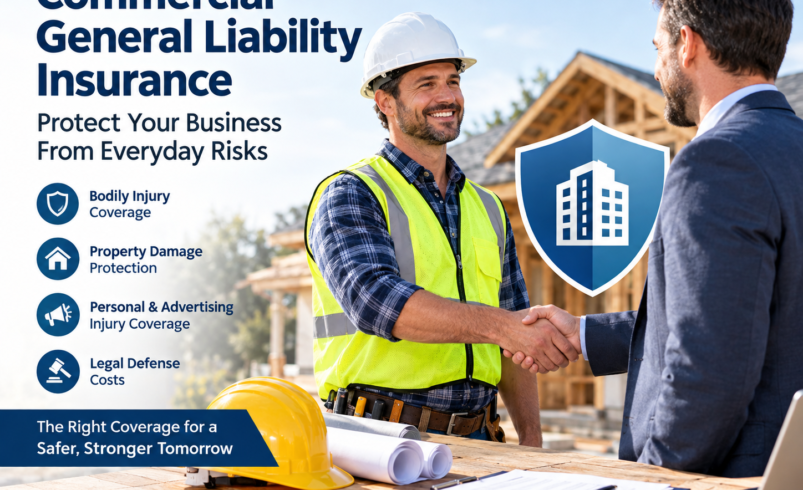
Commercial general liability insurance helps businesses manage these risks by providing coverage for certain third-party bodily injury, property damage, and personal or advertising injury claims. It is an important consideration for contractors, small business owners, service providers, and companies that regularly interact with customers.
Understanding what this policy covers, what it excludes, and how to select appropriate limits can help you protect your business and make more informed insurance decisions.
What Is Commercial General Liability Insurance?
Commercial general liability insurance, commonly called CGL insurance, is a business insurance policy designed to protect companies against certain claims involving third parties.
A third party generally means someone outside your business, such as a customer, client, visitor, or another business.
For example, imagine a painting contractor working inside a customer’s property. An employee accidentally knocks over equipment, damaging an expensive television. If the customer makes a covered property damage claim, the contractor’s liability policy may help pay eligible repair or replacement costs, subject to policy terms.
Depending on the policy, commercial general liability coverage may also help with legal defense expenses, settlements, and judgments arising from covered claims.
It is particularly useful for businesses that:
-
Work at customer locations.
-
Welcome customers or visitors onto their premises.
-
Perform construction, repair, or installation services.
-
Advertise products or professional services.
-
Enter contracts requiring proof of liability coverage.
What Does Commercial General Liability Insurance Cover?
Understanding the main coverage categories makes it easier to determine whether a policy meets your business needs.
1. Bodily Injury Liability
Bodily injury coverage generally applies when a third party suffers physical injury connected to your business operations or premises, subject to policy conditions.
For example, a customer visiting a retail store slips on a wet floor and sustains an injury. The customer may file a claim against the business.
If the incident falls within the policy’s coverage, commercial general liability insurance may help cover eligible medical expenses, legal defense costs, settlements, or judgments.
This protection can be valuable for businesses with customer-facing locations, offices, showrooms, and job sites.
2. Property Damage Liability
Property damage coverage addresses certain claims involving damage to someone else’s physical property caused by your business operations.
Consider a plumbing contractor repairing a kitchen sink. A fitting is installed incorrectly, resulting in water damage to the customer’s cabinets and flooring.
Depending on the circumstances and policy exclusions, liability coverage may help address the resulting claim.
This type of protection is especially relevant for contractors, construction businesses, maintenance providers, and repair professionals.
3. Personal and Advertising Injury
Commercial general liability policies may also cover certain nonphysical injuries involving personal or advertising rights.
Examples can include:
-
Libel or slander claims.
-
Certain forms of copyright infringement in advertising.
-
False arrest or wrongful detention claims.
-
Certain privacy-related claims.
Coverage depends on the policy wording, applicable exclusions, and circumstances surrounding the allegation.
4. Legal Defense Costs
A liability claim can become expensive even when a business owner believes the allegation is incorrect.
Many CGL policies provide coverage for legal defense expenses associated with covered claims. This may include attorney fees, court costs, and other eligible defense expenses.
However, defense arrangements and payment limits vary by policy. Review whether defense costs are included within or outside the applicable liability limits.
Why Do Contractors Need General Liability Insurance?
Contractors regularly work around valuable property, equipment, employees, customers, and other tradespeople. Even when a project is completed carefully, accidents can happen.
Insurance for contractors helps address different business risks, and general liability is often an important part of that protection.


Common Contractor Liability Scenarios
Accidental property damage: A remodeling contractor damages a client’s flooring while moving construction materials.
Third-party injury: A visitor trips over equipment left near a work area and files an injury claim.
Completed operations claim: A customer reports property damage after a contractor finishes a project, alleging that the completed work caused the problem.
Advertising-related allegation: A business faces a covered claim involving certain statements or materials used in its advertising.
These examples demonstrate why contractors should understand both ongoing operations coverage and products-completed operations coverage.
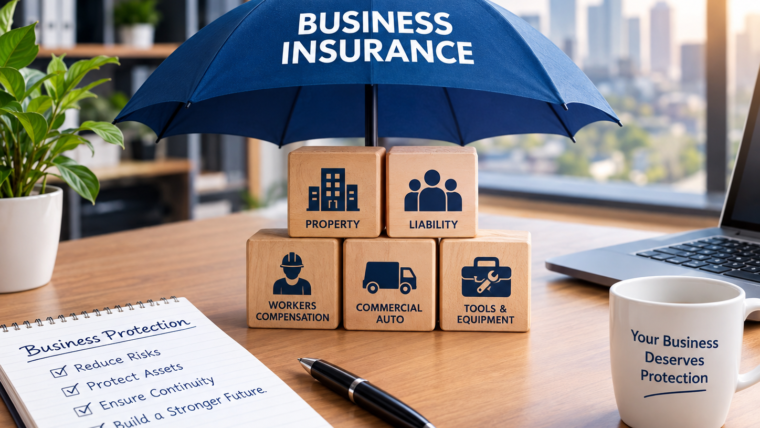
Importantly, general liability does not replace every type of contractor insurance. Workers’ compensation, commercial auto, tools and equipment coverage, and professional liability may address different exposures.
What Commercial General Liability Insurance Does Not Cover
One common misunderstanding is assuming general liability protects every part of a business.
In reality, policies contain exclusions and limitations. Knowing them helps prevent coverage gaps.
|
Common exclusion or limitation |
Potential coverage to consider |
|---|---|
|
Employee work-related injuries |
Workers’ compensation insurance |
|
Damage to your own business property |
Commercial property insurance |
|
Business vehicle accidents |
Commercial auto insurance |
|
Professional errors or negligent advice |
Professional liability insurance |
|
Theft or damage to contractor tools |
Tools and equipment coverage |
|
Certain pollution-related claims |
Contractors pollution liability |
|
Intentional or expected damage |
Generally excluded under liability policies |
Coverage depends on the policy, endorsements, and applicable law. Some exclusions may have exceptions or limited coverage extensions.
For example, general liability may cover certain damage to a customer’s property, but it does not automatically cover damage to the contractor’s own tools, inventory, or equipment.
Reviewing exclusions before purchasing a policy can help you identify where additional protection may be necessary.
How Much Commercial General Liability Insurance Does a Business Need?
The right coverage limit depends on your business operations, potential liability exposure, contract requirements, and financial circumstances.
Many small businesses consider policies with $1 million per occurrence and $2 million general aggregate limits. However, these are common examples rather than universal requirements.
A contractor working on larger commercial projects may need higher limits because a contract or project owner could require additional coverage.
When selecting limits, consider:
Your Business Activities
A home-based consultant may have different liability exposures than a roofing contractor working at multiple job sites.
Customer and Contract Requirements
Commercial clients, property managers, and general contractors may require specific liability limits before allowing work to begin.
Potential Claim Costs
Consider the possible financial impact of property damage, third-party injuries, and legal defense expenses.
Your Business Size
The number of employees, annual revenue, project volume, and locations can influence your insurance needs and premium.
An insurance professional can help evaluate these factors and identify suitable coverage options.
What Factors Affect General Liability Insurance Costs?
Commercial general liability insurance premiums vary according to the business’s risk profile and selected policy terms.
Common pricing factors include:
-
Industry classification: Construction and contracting activities may carry different exposures than office-based businesses.
-
Annual revenue: Insurers may use revenue as a rating factor for certain business classifications.
-
Payroll and employee count: These may affect pricing for eligible classifications.
-
Claims history: Previous liability claims can influence underwriting decisions.
-
Coverage limits: Higher limits generally increase premium costs.
-
Deductibles: Selected deductibles or self-insured retentions may affect pricing.
-
Location: Geographic risk factors and state-specific conditions can influence premiums.
The cheapest policy is not necessarily the most suitable. A lower premium may come with restrictive exclusions, lower limits, or coverage conditions that do not match your operations.
Compare policies based on protection, not price alone.
How to Choose the Right General Liability Policy
Selecting business liability coverage becomes easier when you understand your risks and review policy details carefully.
Step 1: Identify Your Business Risks
List the services you provide, locations where you work, equipment you use, and types of customers you serve.
Contractors should explain their actual operations accurately when requesting quotes.
Step 2: Review Coverage Limits
Check both per-occurrence and aggregate limits. Make sure they align with contractual obligations and your potential exposure.
Step 3: Understand Policy Exclusions
Ask about exclusions involving subcontractors, residential construction, completed operations, specific types of property damage, and other activities relevant to your business.
Step 4: Confirm Additional Insured Requirements
Some contracts require a business or property owner to be added as an additional insured.
Ask your insurer whether the necessary endorsement is available and whether it satisfies the contract wording.
Step 5: Compare Quotes Carefully
Review premiums, deductibles, coverage limits, endorsements, exclusions, and insurer requirements before making a decision.
A qualified insurance agent can help explain differences between policies and identify potential coverage gaps.
Is General Liability Insurance Required for Contractors?
General liability insurance is not universally required by law for every business. However, contractual obligations, licensing rules, project requirements, or industry standards may make it necessary.
For example, a general contractor may require subcontractors to provide a certificate of insurance before entering a construction site.
A certificate of insurance provides evidence of coverage but does not change the policy itself or guarantee that a particular claim will be covered.
Contractors should verify applicable California requirements and review their agreements before starting work.
Frequently Asked Questions
Is commercial general liability insurance the same as business liability insurance?
Commercial general liability is a specific type of business liability coverage. The broader term business liability insurance may refer to different policies or coverage arrangements depending on the insurer.
Does general liability insurance cover subcontractors?
Not automatically in every situation. Coverage depends on policy wording, the subcontractor’s relationship with the insured business, and applicable exclusions or endorsements. Contractors should confirm requirements with their insurance provider.
Does general liability cover completed work?
Many CGL policies include products-completed operations coverage, which may address certain bodily injury or property damage claims arising from completed work. Coverage remains subject to exclusions and policy conditions.
Can a small business operate without general liability insurance?
Some businesses may legally operate without it, but doing so can expose business assets to covered liability claims and legal expenses. Contractual or regulatory requirements may also apply.
How can I get a commercial general liability insurance quote?
Prepare information about your business activities, annual revenue, employee count, claims history, locations, and coverage requirements. An insurance agent can use these details to obtain and compare suitable quotes.
Protect Your Business With the Right Liability Coverage
Unexpected accidents and third-party claims can create significant financial challenges for businesses of every size. Commercial general liability insurance helps manage certain risks involving bodily injury, property damage, and personal or advertising injury.
For contractors and small business owners, choosing appropriate coverage starts with understanding daily operations, contractual obligations, policy exclusions, and potential claim costs.
Rather than selecting a policy based only on its price, compare coverage details and make sure the protection matches your business activities. The right insurance arrangement can help you approach projects, customer relationships, and business growth with greater financial confidence.