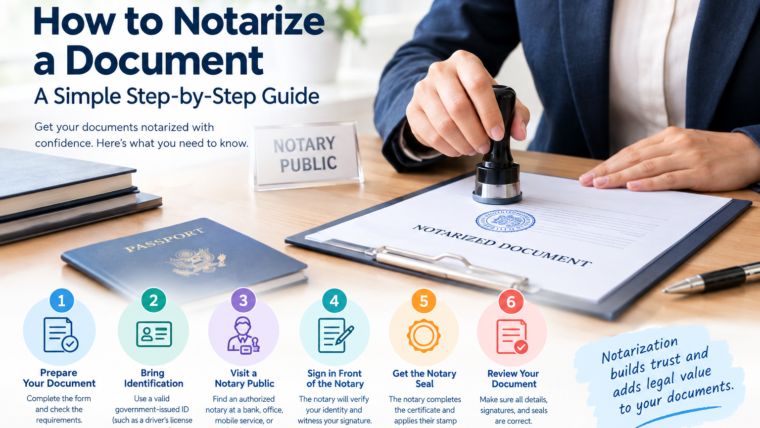


Notarizing a document can seem confusing if you have never done it before. Whether you need a notarized affidavit, power of attorney, real estate document, authorization form, or another legal document, the basic process is usually straightforward once you know what to expect.
If you are wondering how to notarize a document, the most important steps involve preparing the document, finding an authorized notary, proving your identity, signing the document in the proper way, and completing the required notarization process. Requirements can vary depending on your location and the type of document, so it is important to follow the applicable rules.
What Does It Mean to Notarize a Document?
Document notarization is a formal process in which a notary public verifies certain facts surrounding the signing of a document. The notary generally checks the identity of the signer, confirms that the person is signing voluntarily, and completes a notarial certificate or other required record.
A notary does not normally determine whether the information inside your document is legally correct. Instead, the notary’s role focuses on the execution of the document and the requirements established by applicable law.
Common documents that may require notarization include:
- Affidavits and sworn statements
- Powers of attorney
- Real estate documents
- Loan and financial documents
- Business agreements
- Authorization letters
- Estate-related documents
- Certain government or immigration forms
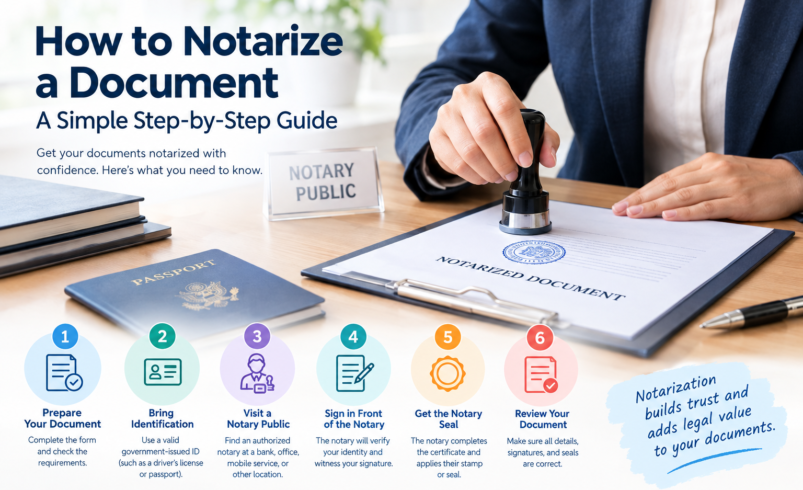
How to Notarize a Document Step by Step
1. Check Whether the Document Needs Notarization
Before looking for a notary, confirm that notarization is actually required. Some documents only need a signature, while others may require a notarized signature, witness, certification, or additional legal process.
Read the instructions provided by the organization requesting the document. If the document is being submitted to a court, government agency, financial institution, or another organization, its specific requirements should be followed.
2. Complete the Document Before Meeting the Notary
Prepare the document carefully before your appointment. Fill in the information that you are responsible for providing, but do not sign it ahead of time if the notary needs to witness your signature.
Leaving the signature blank until the notarization appointment can help ensure that the signing takes place correctly.
Also check the document for missing names, dates, addresses, amounts, or other important information. A notary may not be authorized to correct the contents of your document for you.
3. Find a Qualified Notary Public
The next step is to locate an authorized notary public who can perform the required notarial act.
Depending on your location, you may find a notary through a bank, law office, shipping or business service provider, mobile notary service, or another authorized provider. Some jurisdictions also allow remote or online notarization under specific conditions.
When choosing a notary, confirm that they can perform the type of notarization you need and that their services comply with the rules where the document will be signed.
4. Bring Acceptable Identification
Identity verification is an important part of the notarization process. You will generally need an acceptable government-issued identification document, such as a passport, driver’s license, or other approved ID.
The exact identification requirements depend on the jurisdiction. Make sure your identification is current and matches the name on the document as required.
If you are unsure whether your ID is acceptable, ask the notary before your appointment.
5. Sign the Document in Front of the Notary
For many notarizations, the signer must personally appear before the notary. Depending on the type of notarial act, you may sign the document while the notary is present or acknowledge a signature that was previously placed on the document.
The notary may ask questions to confirm your identity and willingness to sign. If an oath or affirmation is required, you may also need to respond to the notary’s questions or make the required declaration.
6. Let the Notary Complete the Notarial Certificate
After the required steps are completed, the notary fills out the appropriate notarial certificate or section of the document.
This may include information such as the date, location, type of notarial act, identification method, and notary details. The notary may also apply an official stamp or seal where required.
Do not fill out the notary’s section yourself unless the notary specifically instructs you to do so.
7. Review the Completed Document
Before leaving, take a moment to check the notarized document. Make sure the names, dates, signatures, notarial certificate, stamp or seal, and other required information appear correctly.
If the document will be submitted to another organization, review its submission instructions as well. Notarization alone may not satisfy every requirement.
What Should You Bring to a Notary Appointment?
Being prepared can make the process much easier. Depending on the situation, you may need:
- The original document
- Acceptable government-issued identification
- Any required witnesses
- Payment for the notary service
- Additional documents requested by the receiving organization
If witnesses are required, confirm in advance whether you must bring them yourself and what identification they need.
Common Mistakes to Avoid When Notarizing a Document
One of the easiest ways to delay a notarization is arriving without the required information or identification.
Avoid signing a document too early when the notary must witness the signing. Do not use an expired or unacceptable form of identification. Also, avoid leaving important blanks that you are expected to complete.
Another common mistake is assuming that notarization automatically makes a document legally valid. A notary generally verifies the signing process rather than providing legal advice about the document’s contents.
If you are unsure about the legal meaning or effect of a document, consider speaking with a qualified attorney or the organization requesting it.
Can You Notarize a Document Online?
In some jurisdictions, remote online notarization is permitted. This process may allow a signer to meet with a notary through an approved online platform while completing identity verification and other required steps electronically.
However, online notarization rules vary by location and document type. Some documents may have additional requirements, and a document notarized remotely may not automatically be accepted everywhere.
Before choosing online notarization, verify that the receiving organization accepts it and that the applicable law permits the process.
How Long Does Document Notarization Take?
A straightforward notarization appointment may take only a short amount of time when the document is complete and the signer has acceptable identification.
However, the total time can increase if witnesses are required, the document contains errors, multiple signatures must be notarized, or additional certifications are needed.
Preparing everything in advance can help prevent unnecessary delays.
Final Thoughts
Understanding how to notarize a document makes the process much easier. Start by checking the document’s requirements, complete the necessary information without signing too early, find an authorized notary, bring acceptable identification, and follow the notary’s instructions during the signing.
Most importantly, remember that notarization is only one part of completing certain legal or official documents. If the receiving organization has specific requirements, confirm them before your appointment. A little preparation can help you avoid rejected paperwork, repeat appointments, and unnecessary delays.