

Running a business involves more than serving customers and earning revenue. Every company faces risks that can affect its property, employees, customers, equipment, vehicles, and daily operations. Some problems are small and manageable, while others can create expenses that are difficult for a business to handle alone.
Business insurance can help companies prepare for many of these unexpected situations. The right coverage may provide financial protection when accidents, property damage, lawsuits, or other covered events disrupt normal operations.
Understanding the available coverage options can make it easier for business owners to identify potential gaps and choose protection that fits their operations.
What Is Business Insurance?
Business insurance is a group of insurance coverages designed to help protect a company from specific financial risks. Instead of relying entirely on business savings to handle a covered loss, an insurance policy may help pay eligible expenses according to its terms, limits, deductibles, and exclusions.
The type of protection a company needs depends on several factors, including its industry, number of employees, location, property, vehicles, equipment, customers, and day-to-day activities.
A contractor, retailer, consultant, restaurant, and construction company may all require different insurance solutions.
Why Do Businesses Need Insurance?
Unexpected events can happen even when a company follows careful safety procedures. A customer could suffer an injury on business property. A fire could damage equipment. A storm could affect a commercial building. An employee could experience a workplace accident.
Without appropriate coverage, a business may have to pay certain expenses directly. Depending on the situation, these costs could affect cash flow and make it harder to continue normal operations.
Business coverage can help reduce the financial impact of covered risks and give owners a structured way to manage potential losses.
Common Types of Business Insurance
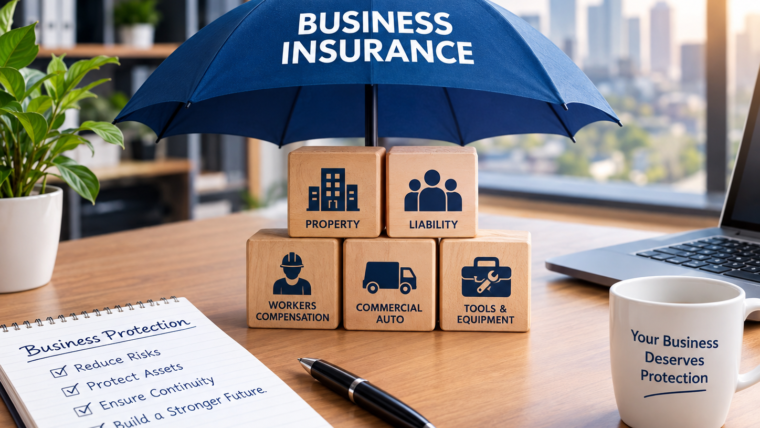
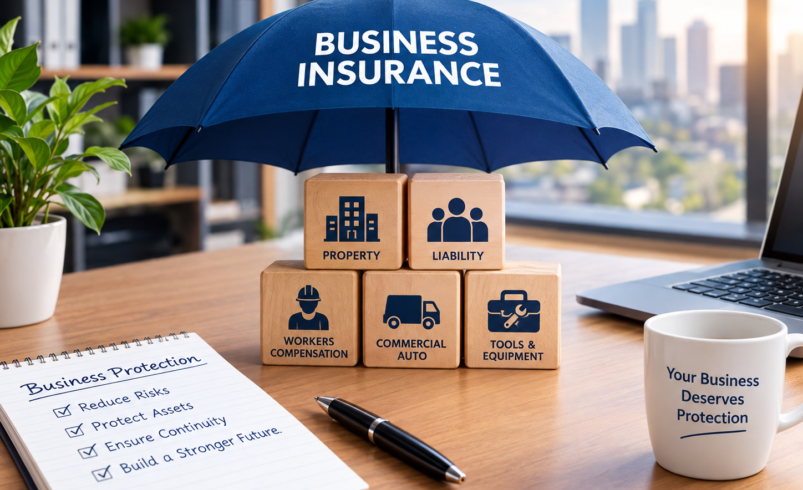
There is no single policy that automatically covers every business risk. Companies often combine different types of coverage based on their specific needs.
General Liability Insurance
General liability coverage is commonly used to address certain third-party claims involving bodily injury, property damage, or personal and advertising injury, subject to the policy terms.
For example, if a customer is injured at a business location and makes a claim, liability coverage may help with eligible legal or related expenses.
This type of protection can be particularly relevant for businesses that regularly interact with customers, vendors, visitors, or clients.
Commercial Property Insurance
Business property can include buildings, furniture, computers, machinery, inventory, tools, and other equipment.
Commercial property insurance may help protect covered business property against specified risks. Coverage varies between policies, so business owners should understand which causes of loss are included and which are excluded.
Protecting physical assets can be important because replacing essential equipment or inventory may require a significant amount of money.
Workers Compensation
Businesses with employees may have workers compensation obligations depending on applicable state laws and the nature of their operations.
Workers compensation insurance generally provides benefits for covered work-related injuries or illnesses, subject to applicable laws and policy requirements. It can also help employers address certain workplace injury-related expenses.
Business owners should review their legal requirements and coverage with a qualified insurance professional.
Commercial Auto Insurance
Personal auto insurance may not provide the protection a business needs when vehicles are used for commercial purposes.
Companies that own, lease, or use vehicles for business activities may need commercial auto coverage. This can be relevant for contractors, delivery companies, service providers, and other businesses that depend on vehicles for daily operations.
The appropriate policy depends on how vehicles are owned and used.
Builders Risk Insurance
Construction projects have their own set of risks. Materials, temporary structures, equipment, and partially completed work can be exposed to covered losses during construction.
Builders risk insurance is designed for certain construction-related property risks. Coverage details can vary depending on the project, policy, and stage of construction.
Contractors and project stakeholders should review the policy carefully to understand what is protected.
Tools and Equipment Coverage
Tools and equipment can represent a major investment, particularly for construction professionals and contractors.
Specialized coverage may help protect eligible tools and equipment against covered losses. Business owners should consider where equipment is stored, transported, and used because these factors can affect the type of protection required.
How to Identify Your Business Insurance Needs
Choosing coverage should begin with understanding the risks associated with the business rather than simply selecting the largest available policy.
Start by identifying valuable assets, including property, vehicles, machinery, computers, inventory, and tools. Next, consider how customers, employees, vendors, and contractors interact with the company.
It is also useful to review potential interruptions. Ask what could happen if a building becomes unusable, equipment is damaged, a vehicle is involved in an accident, or a customer makes a liability claim.
Industry requirements should also be considered. A construction company may face very different risks from an office-based consulting business.
Review Policy Limits, Deductibles, and Exclusions
Buying insurance is only part of the process. Understanding the policy is equally important.
Policy limits determine how much the insurer may pay for covered claims under the applicable terms. A deductible is the amount the policyholder may be responsible for paying before certain insurance benefits apply.
Exclusions are also important because they identify situations or losses the policy does not cover. Business owners should not assume that every type of damage or liability is automatically included.
Reviewing these details before a claim occurs can help reduce unpleasant surprises.
Keep Your Coverage Updated as Your Business Changes
A company can change significantly over time. It may purchase new equipment, hire additional employees, move to a larger location, add vehicles, expand services, or take on larger projects.
Insurance that was suitable when the company was smaller may not provide the same level of protection after major changes.
Business owners should periodically review their coverage and notify their insurance professional about significant changes. Keeping property values, vehicle information, employee details, and business activities current can help maintain appropriate protection.
Why Risk Management Still Matters
Insurance is an important part of risk management, but it should not replace practical safety measures.
Businesses can reduce avoidable risks by maintaining equipment, training employees, protecting customer information, creating workplace safety procedures, and keeping appropriate records.
Good risk management combines preventive measures with suitable insurance coverage. This approach can help businesses prepare for unexpected events while continuing to focus on customers and operations.
Final Thoughts
Every business faces a different combination of risks. The right insurance strategy depends on the company’s activities, assets, employees, location, industry, and potential liabilities.
Business insurance can provide financial protection against certain covered losses, but policies differ in coverage, limits, deductibles, conditions, and exclusions. Taking time to understand these details can help business owners make informed decisions and identify potential coverage gaps.
Regular policy reviews are also important as a company grows or changes. A thoughtful approach to insurance and risk management can help businesses prepare for unexpected challenges and protect the resources they rely on to operate.