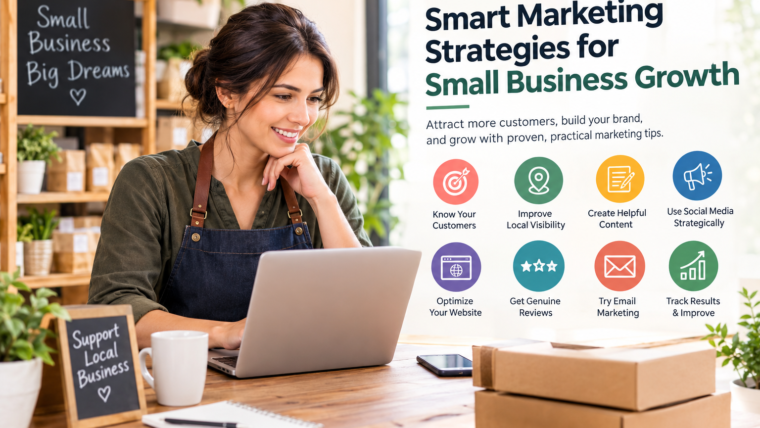


Running a small business often means working with limited time, a smaller budget, and fewer resources than larger companies. The challenge is not simply finding ways to promote your business. It is knowing which marketing activities are worth your time and which ones are unlikely to produce meaningful results.
The right marketing strategies for small business can help you reach the people most likely to become customers while building a stronger online presence. Instead of trying every available marketing channel, small businesses can focus on practical methods that improve visibility, credibility, customer engagement, and long-term growth.
Start With a Clear Understanding of Your Customers
Effective marketing begins with knowing who you are trying to reach. A small business should understand its ideal customers, their needs, common problems, buying habits, and the reasons they choose one business over another.
For example, a local restaurant may focus on nearby families and workers, while a professional service provider may target homeowners or other businesses. These audiences may search for different information and respond to different messages.
Creating a simple customer profile can help you decide:
- What problems your customers want to solve
- What products or services they need
- Where they search for businesses
- What questions they commonly ask
- What factors influence their purchasing decisions
This information makes your marketing more focused and prevents you from spending money trying to reach everyone.
Build a Strong Local Online Presence
Many customers search online before visiting or contacting a local business. If your business information is incomplete, inconsistent, or difficult to find, potential customers may move on to another option.
Start by making sure your business name, address, phone number, website, hours, services, and other important details are accurate wherever your business appears online.
This is where business listings can become an important part of a local marketing strategy. A complete listing gives potential customers useful information and can make your business easier to discover through local searches.
Keep your business information consistent across relevant directories and platforms. Update your details whenever your phone number, address, operating hours, or services change.
Create Useful Content Instead of Constantly Selling
Small businesses do not need to publish content every day to benefit from content marketing. What matters more is whether the content answers questions or solves problems for your target audience.
Think about the questions customers ask before buying from you. Those questions can become blog posts, FAQs, guides, short videos, social media posts, or website resources.
For example, a home service company could create content explaining how customers can identify common maintenance problems. A local retailer could publish buying guides that help shoppers compare different products.
Helpful content can support search engine visibility while also showing potential customers that your business understands their needs.
Use Social Media With a Purpose
Social media can help small businesses stay connected with existing customers and introduce their products or services to new audiences. However, posting without a clear purpose can quickly become a waste of time.
Choose platforms that your target customers actually use. Then create content around useful information, customer questions, product updates, behind-the-scenes activities, educational tips, and relevant business news.
You do not need to be active on every platform. Maintaining one or two channels consistently can be more effective than creating accounts everywhere and rarely updating them.
Make Your Website Work Harder
Your website should make it easy for visitors to understand what you offer and what they should do next.
A small business website should clearly communicate:
- What the business provides
- Who the service or product is for
- Where the business operates
- How customers can get in touch
- What makes the business trustworthy
- What action visitors should take
Use clear page titles, descriptive headings, relevant keywords, useful internal links, and straightforward calls to action.
Mobile usability is also important because many people search for businesses using smartphones. Pages should load properly, information should be easy to read, and contact details should be simple to find.
Encourage Genuine Customer Reviews
Reviews can influence how potential customers perceive a business. They can also provide useful information about what customers value most.
Ask satisfied customers to leave honest feedback after they have used your product or service. Make the process simple by providing a direct way to find your review profile.
Do not create fake reviews or offer misleading incentives for positive feedback. Authentic customer experiences are more valuable for building long-term trust.
It is also important to respond professionally to reviews. Thank customers for positive feedback and address legitimate concerns respectfully. A thoughtful response can show future customers that you take customer service seriously.
Focus on Local Search Optimization
For businesses that serve a specific area, local SEO can be an effective way to attract people who are already looking for relevant products or services.
Use location information naturally throughout your website where it genuinely helps visitors. Create useful location pages when you serve multiple areas, but make sure each page contains meaningful information rather than simply repeating the same text with different city names.
Other useful local SEO activities include maintaining accurate directory information, improving your website’s location signals, collecting genuine reviews, and publishing content relevant to your local audience.
The goal is not simply to appear in search results. The goal is to make it easier for the right customers to understand and choose your business.
Try Email Marketing for Customer Retention
Getting a new customer is only one part of business growth. Keeping existing customers engaged can also create valuable opportunities.
Email marketing can be used to share helpful information, product updates, seasonal announcements, special offers, or educational content.
Avoid sending messages too frequently or making every email a sales pitch. Useful and relevant communication is more likely to keep subscribers engaged.
For example, a service business could send seasonal maintenance reminders, while an online store could provide product recommendations based on previous interests.
Set a Realistic Marketing Budget
One of the biggest problems for small businesses is spending money without knowing whether a campaign is working.
Before investing in advertising or other promotional activities, decide what you want to achieve. Your goal might be more website visitors, phone calls, inquiries, store visits, bookings, or online sales.
Track basic measurements such as:
- Website traffic
- Search visibility
- Leads and inquiries
- Conversion rate
- Customer acquisition cost
- Repeat customers
- Revenue generated by campaigns
You do not need complicated analytics to start. Even basic tracking can help you identify which activities deserve more attention.
Combine Online and Offline Marketing
Digital marketing is important, but traditional marketing can still have a place in a small business strategy.
Depending on your industry, useful offline methods may include community events, local partnerships, networking, referral programs, printed materials, workshops, or sponsorships.
The strongest approach can be a combination of online and offline activities. For example, a business could meet customers at a local event and then direct them to its website or social media page for more information.
Improve Your Strategy Based on Results
Marketing should not be a one-time activity. Review your results regularly and identify what is actually helping your business.
If a particular type of content brings relevant visitors, create more useful content around related questions. If a marketing channel produces little engagement or few customers after reasonable testing, consider changing the approach.
Small improvements can add up over time. You do not need a huge marketing budget to build visibility. You need a clear audience, useful messaging, consistent business information, and a willingness to measure and improve your efforts.
Final Thoughts
Successful small business marketing is less about doing everything and more about doing the right things consistently. A combination of local SEO, helpful content, social media, customer reviews, email marketing, website optimization, and accurate business information can create a strong foundation for sustainable growth.
The best marketing strategies for small business should fit the company’s audience, goals, resources, and location. By focusing on customer needs and measuring real results, small businesses can improve their visibility while avoiding unnecessary marketing expenses.